
If you’ve heard about Nalua Vanilla Bali, you probably know us for our hand-pollinated vanilla beans. What surprises some people is what else lives on our farm: a colony of trigona bees — stingless, native to Bali, and entirely uninterested in our vanilla flowers. We raise them on purpose, we harvest their honey by hand, and we sell it as a product in its own right. This is the story of why a vanilla farm keeps bees that play no role in vanilla at all — and what makes trigona honey Bali’s most quietly extraordinary natural product.
First, Let's Clear Something Up
There’s a common misconception worth addressing directly: trigona bees do not pollinate vanilla. They’re far too small to reach the reproductive parts of a vanilla flower, and they show no behavioral interest in doing so. Our vanilla is 100% hand-pollinated by Pak Wayan, our farmer — every single flower, by hand, one at a time. The trigona colony on our farm has nothing to do with that process. Their role at Nalua is entirely separate, and it begins and ends with honey.
What Are Trigona Bees?
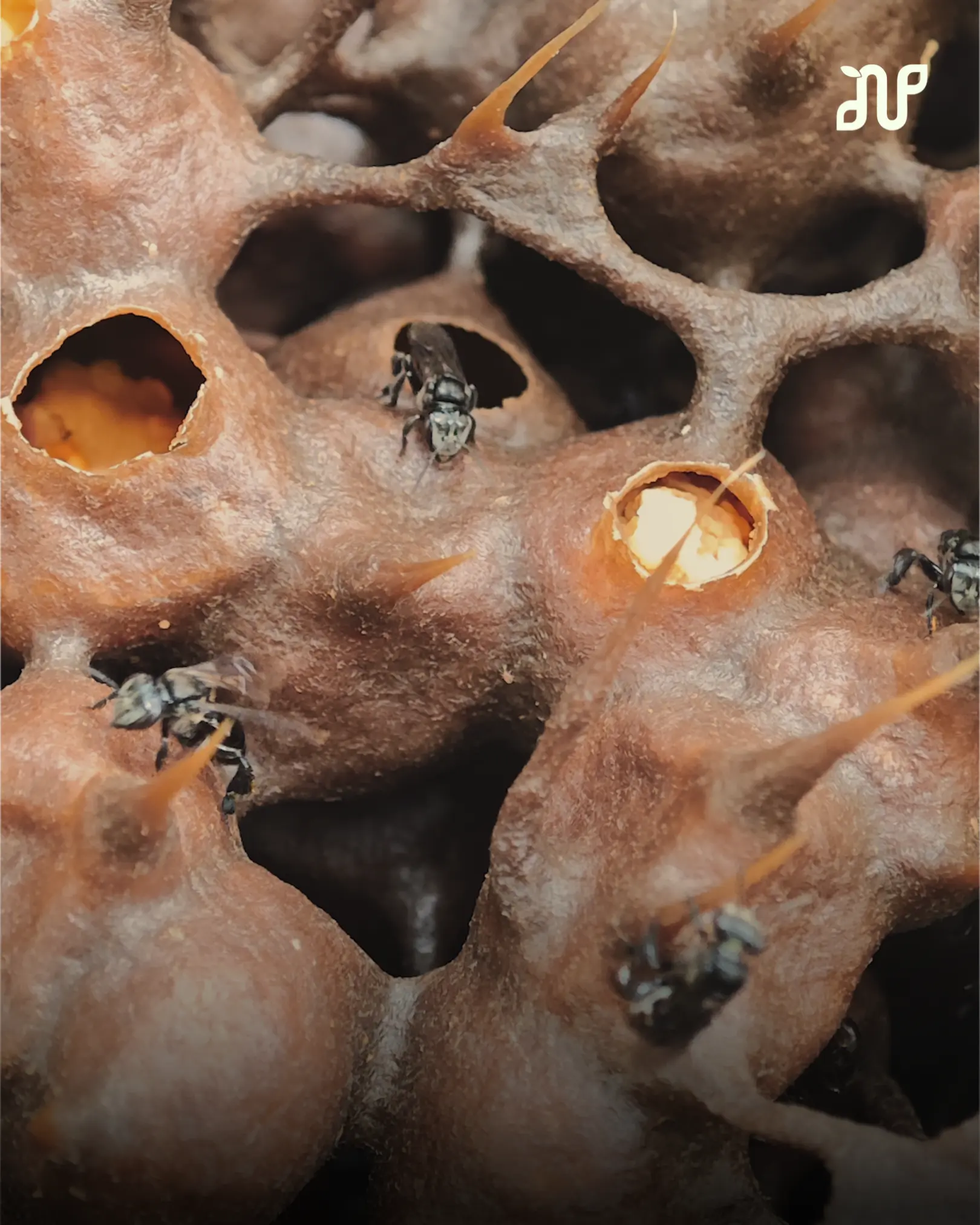
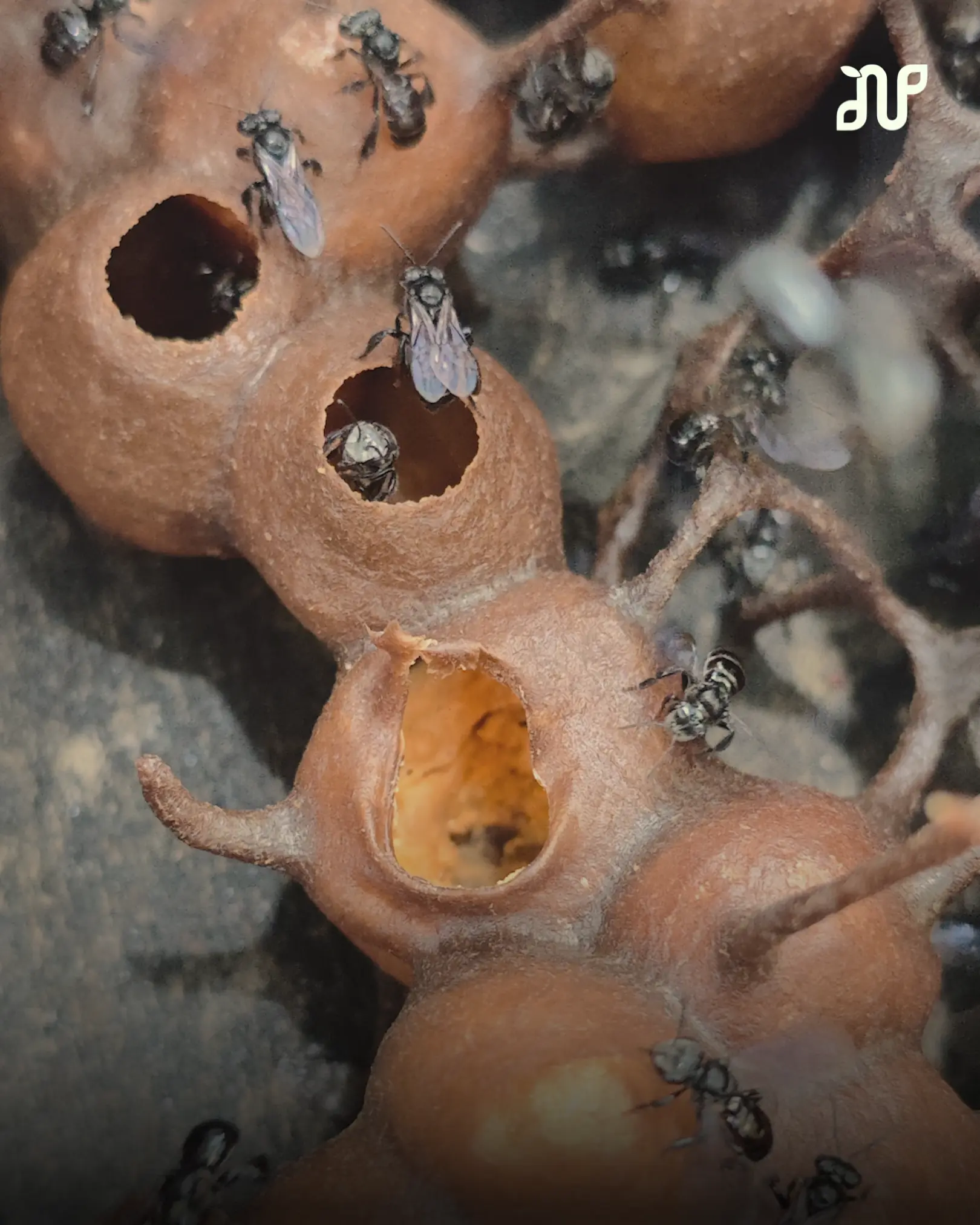
Trigona bees — known locally as lebah klanceng or lebah madu — are a species of stingless bee native to tropical Southeast Asia, including Bali. Unlike the European honeybee most people picture when they think of beekeeping, trigona bees have no functional stinger and pose no threat to humans. They’re small enough to mistake for a housefly, they live in compact colonies, and they build their nests in enclosed structures rather than open-air hives. Their honey is thinner and more acidic than conventional honey, with a distinctive tangy flavour profile and a moisture content that varies naturally from batch to batch. Stingless bee honey of this kind has been used across Southeast Asia for generations and is increasingly recognised for its distinct character.
Native, Not Imported
One of the reasons we raise trigona bees at Nalua rather than a more commercially common species is that trigona are native to this landscape. They forage naturally among the trees and plants that already grow within and around our agroforestry system. We’re not introducing a foreign species or managing an artificial colony — we’re creating conditions where a bee that already belongs here can thrive and produce.
How We Harvest Trigona Honey at Nalua
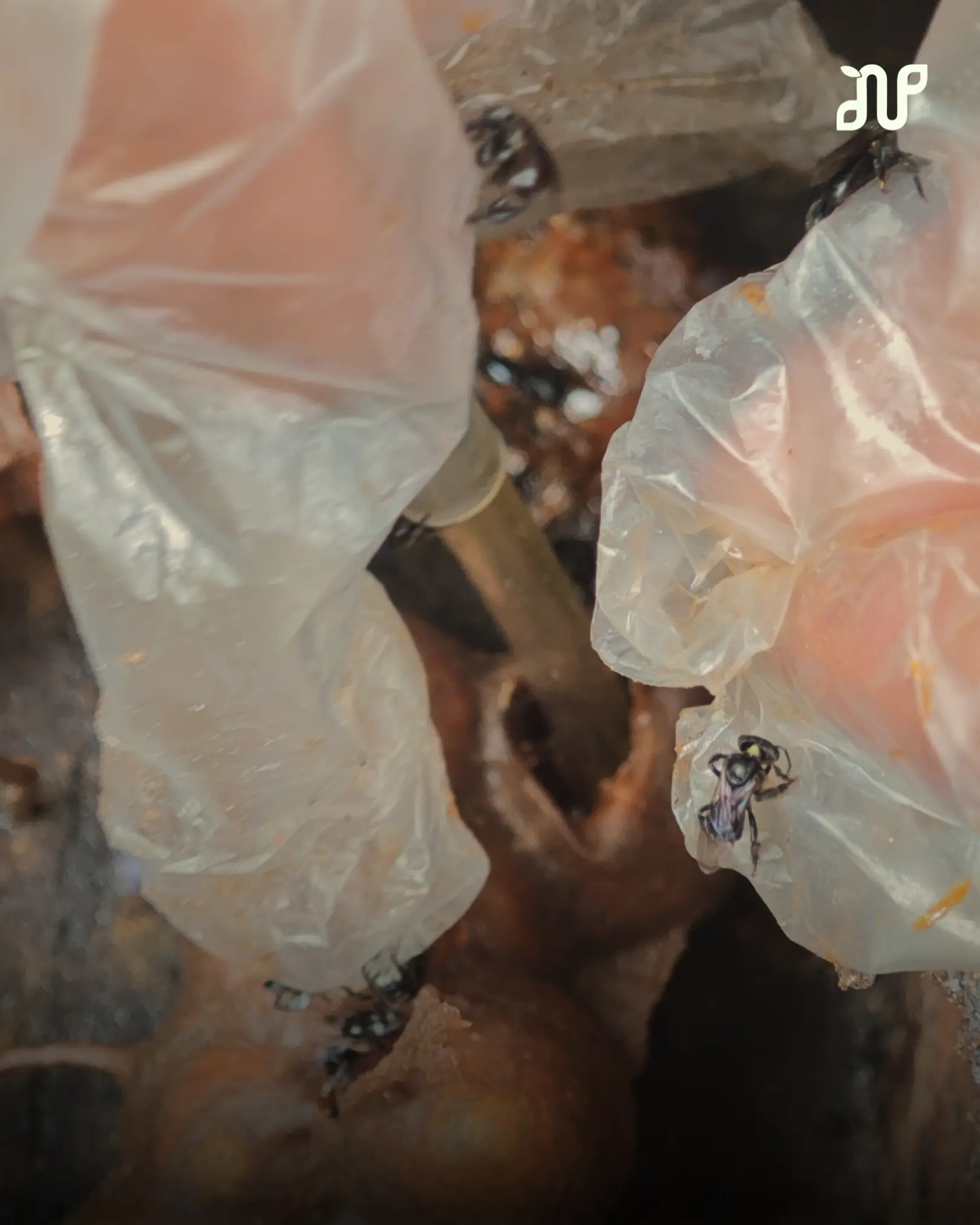
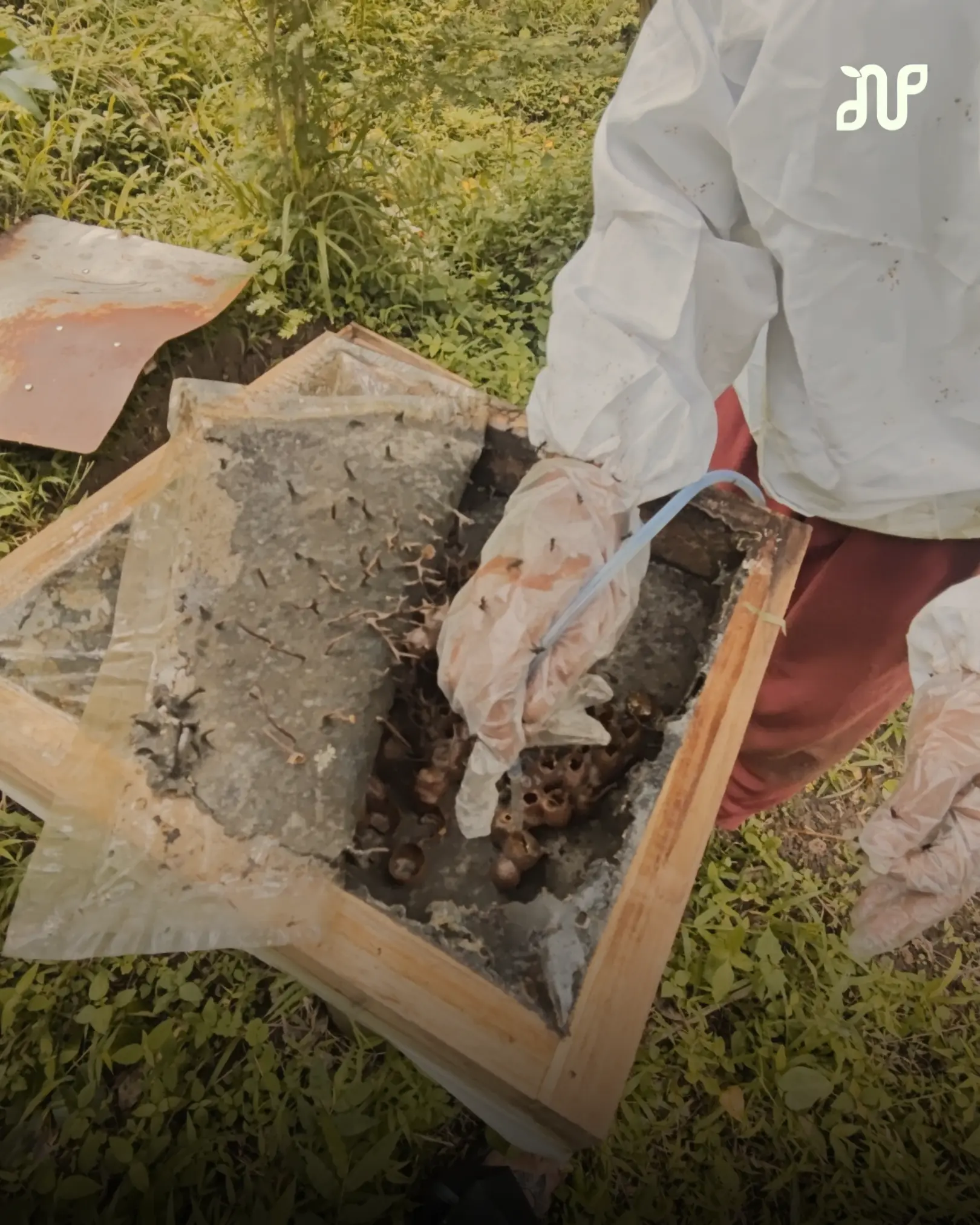
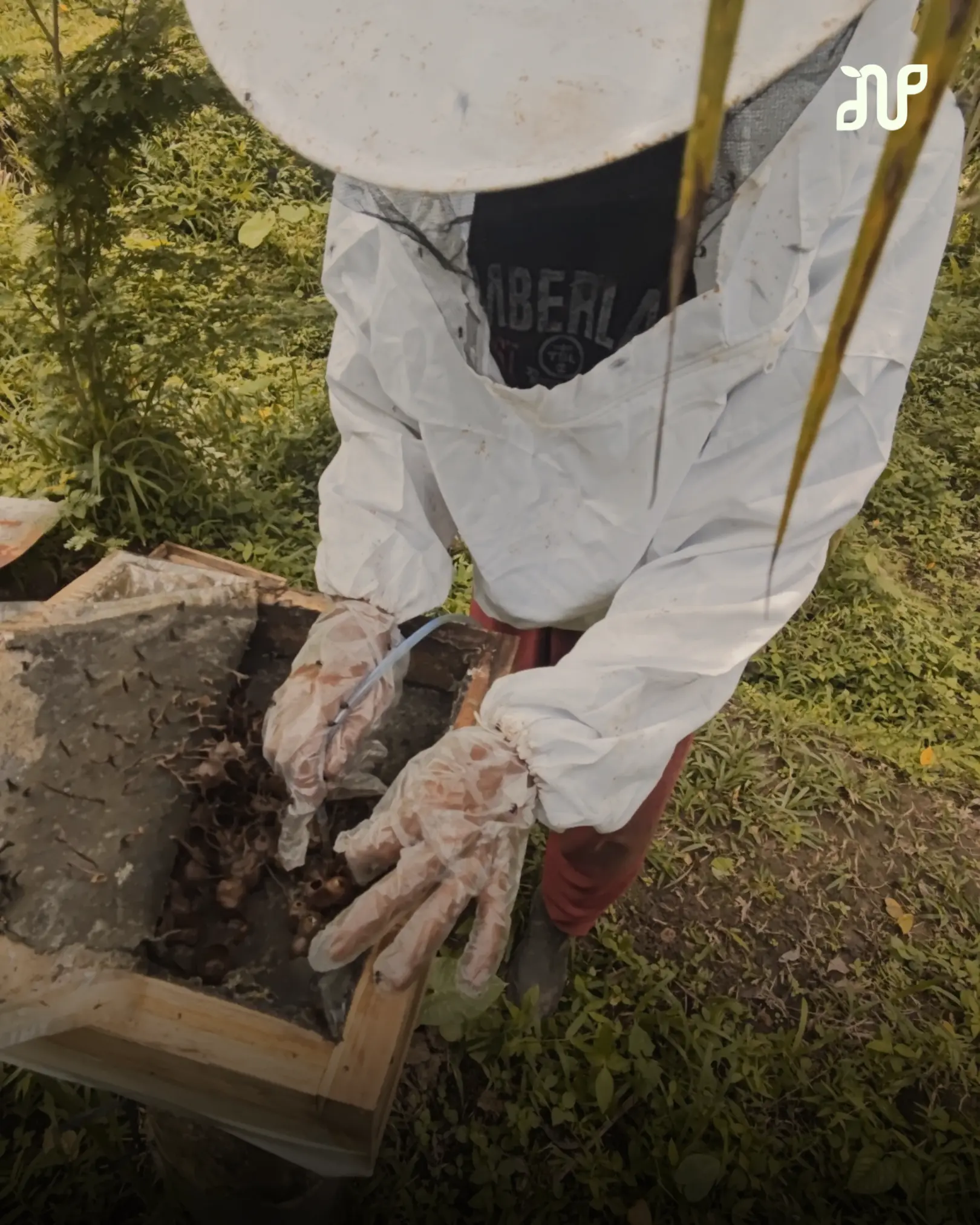
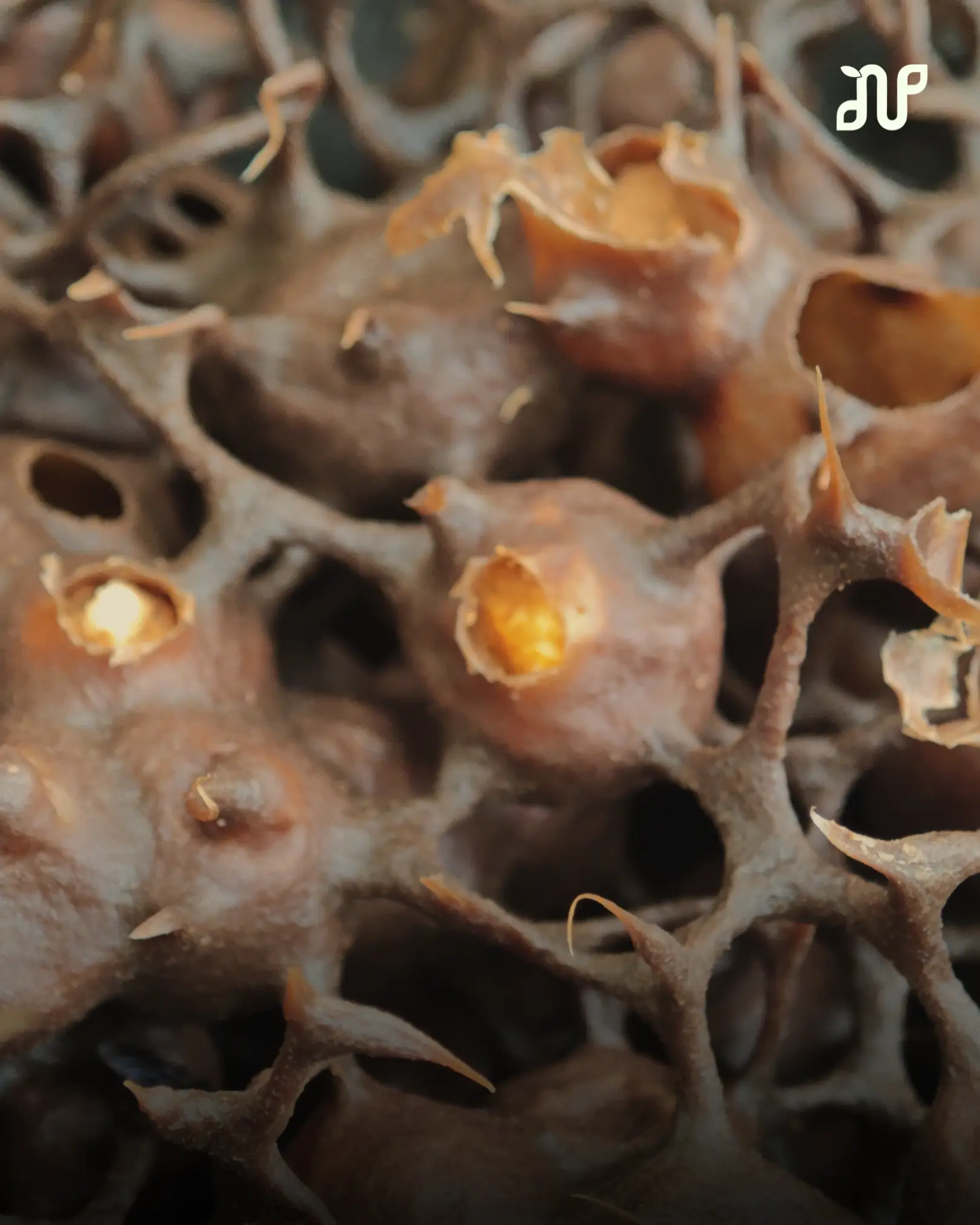
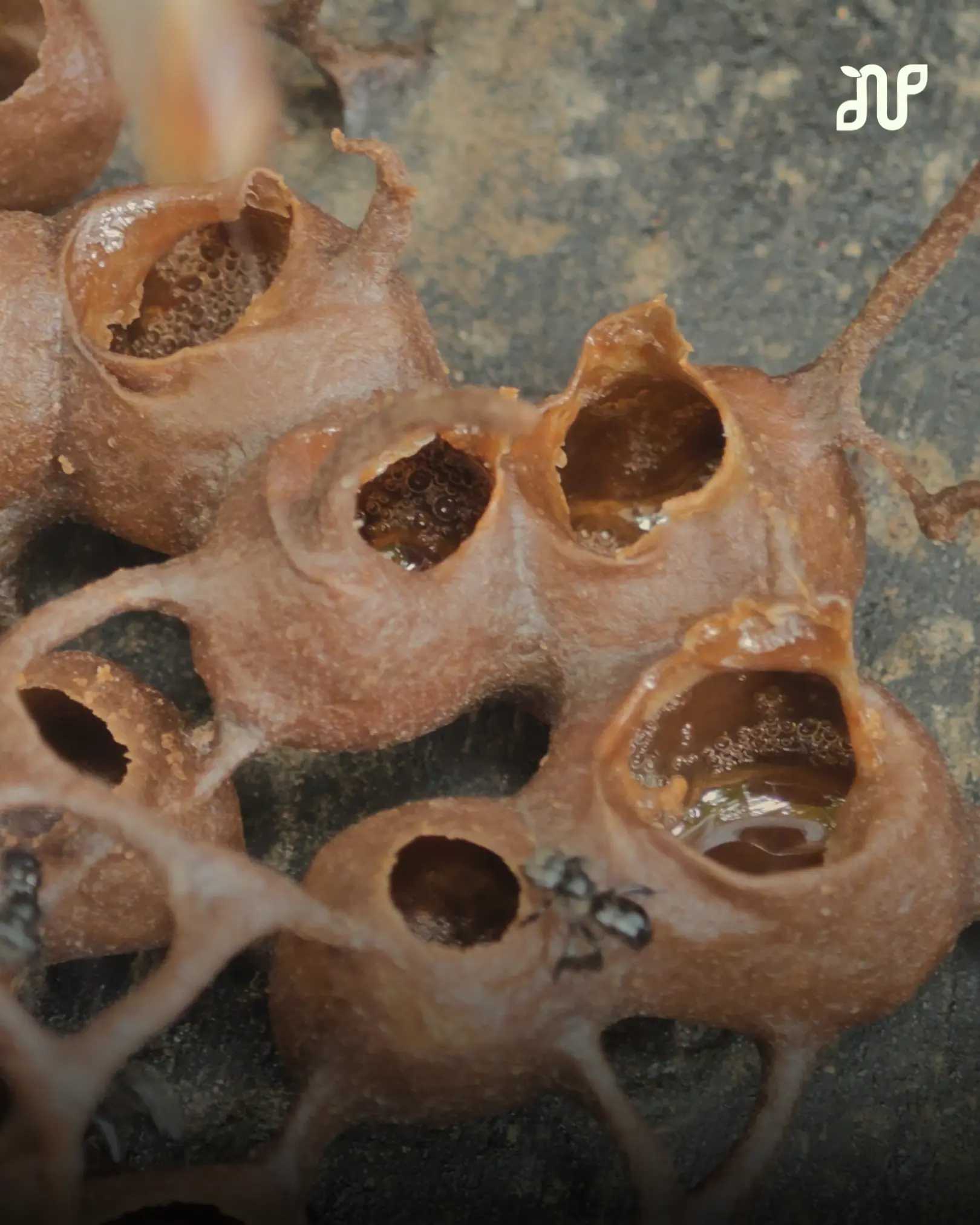
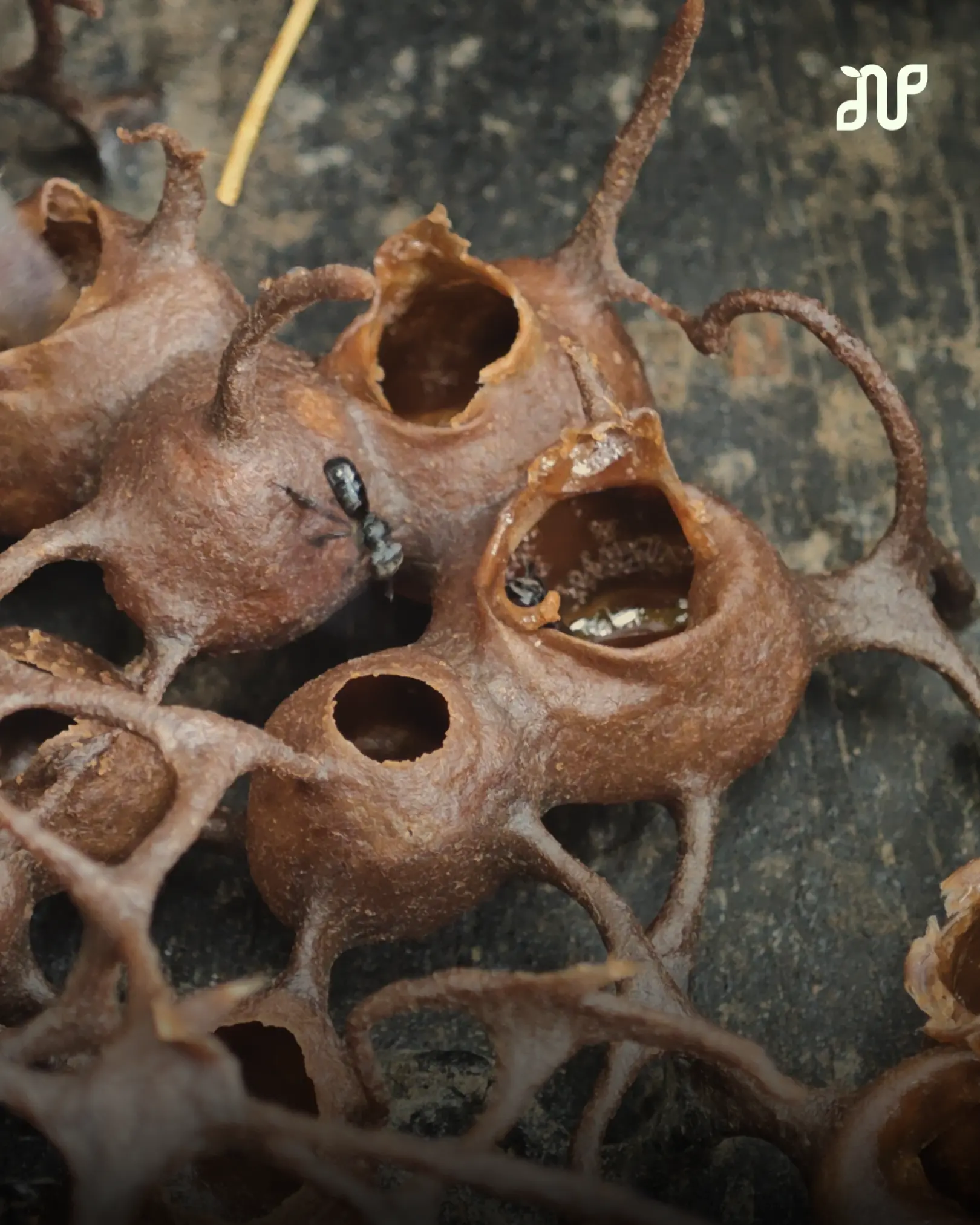
Trigona bees don’t produce honey in conventional frames or removable comb sections. They store their honey in small resin-sealed pots built from a mixture of wax and plant resins called propolis. At Nalua, the honey is extracted by suction directly from the nest structure — a careful, minimal-disturbance process that leaves the colony intact and able to keep producing. There’s no crushing, no spinning, no frames to pull. Just a gentle extraction from a living, working nest.
Small Colony, Small Yield
Trigona colonies are significantly smaller than conventional honeybee hives, and they produce honey in correspondingly smaller quantities. A single trigona nest might yield a fraction of what a standard beehive produces in the same period. That low yield is part of what makes trigona honey a specialty product — it’s genuinely limited in supply, which is reflected in both its price and the care we put into every harvest.
Why Keep Bees on a Vanilla Farm at All?
The honest answer is that a well-managed farm is rarely just one thing. Nalua was never designed as a vanilla monoculture. Our vanilla vines grow up gliricidia trees in a multi-canopy agroforestry system — a layered arrangement of plants that creates a small, self-sustaining ecosystem rather than a single-crop plot. Within that kind of environment, adding trigona bees makes sense. They forage within the existing plant canopy. They produce propolis from the resin of trees already growing on the farm. And they give us a second distinct product to offer alongside our vanilla — one that reflects the same principle of slow, careful, small-batch production. The bees belong here not because they help the vanilla, but because a living farm can support more than one kind of craft.
What Trigona Honey Tastes Like
People expecting trigona honey to taste like the honey they know from a squeeze bottle are often surprised. It’s thinner in texture, lighter in colour, and noticeably more acidic — some batches have a slight tartness, others a gentle floral note, depending on what the bees have been foraging. The flavour is more variable than commercial honey precisely because it’s unprocessed and tied directly to the seasonal forage available on and around the farm. If you’ve only ever had blended, pasteurised supermarket honey, trigona honey from a single farm source is a genuinely different experience.
Two Products, One Farm Philosophy
What connects our vanilla and our trigona honey isn’t that one helps produce the other. What connects them is how they’re made: slowly, by hand, in small quantities, with a single farmer and a close relationship to what the land naturally supports. Pak Wayan pollinates the vanilla one flower at a time. The honey is extracted one nest at a time. Neither product exists at scale. Both are the result of a farm that prioritises craft over volume. If you’d like to experience both, you can explore our full range of Nalua products — or follow @naluavanillabali to watch life on the farm as it unfolds across the seasons.
Frequently Asked Questions About Trigona Honey and Vanilla Farming
Do trigona bees help pollinate vanilla at Nalua?
No. Trigona bees do not pollinate vanilla — they are too small to access the flower’s reproductive parts and show no tendency to do so. Every vanilla flower at Nalua is hand-pollinated by Pak Wayan using a bamboo splinter, one bloom at a time.
Is Nalua's trigona honey raw and unprocessed?
Yes. The honey is harvested by suction directly from the nest structure without heating, filtering, or blending. Because it’s unprocessed, its flavour and texture vary naturally between harvests.
Why is trigona honey more expensive than regular honey?
Trigona colonies are small and produce significantly less honey than conventional hives. Harvesting is done by hand with minimal disturbance to the colony, and the yield per nest is low. The combination of limited supply and careful production makes it a genuine specialty product.
What does trigona honey taste like?
It’s thinner and more acidic than conventional honey, with a tangy quality and variable floral notes depending on what the bees foraged during that season. The flavour is closer to something fermented and bright than the thick sweetness most people associate with honey.
Trigona honey and hand-pollinated vanilla share the same farm, the same farmer, and the same unhurried approach to making something worth tasting. One just happens to involve bees, and the other doesn’t.