
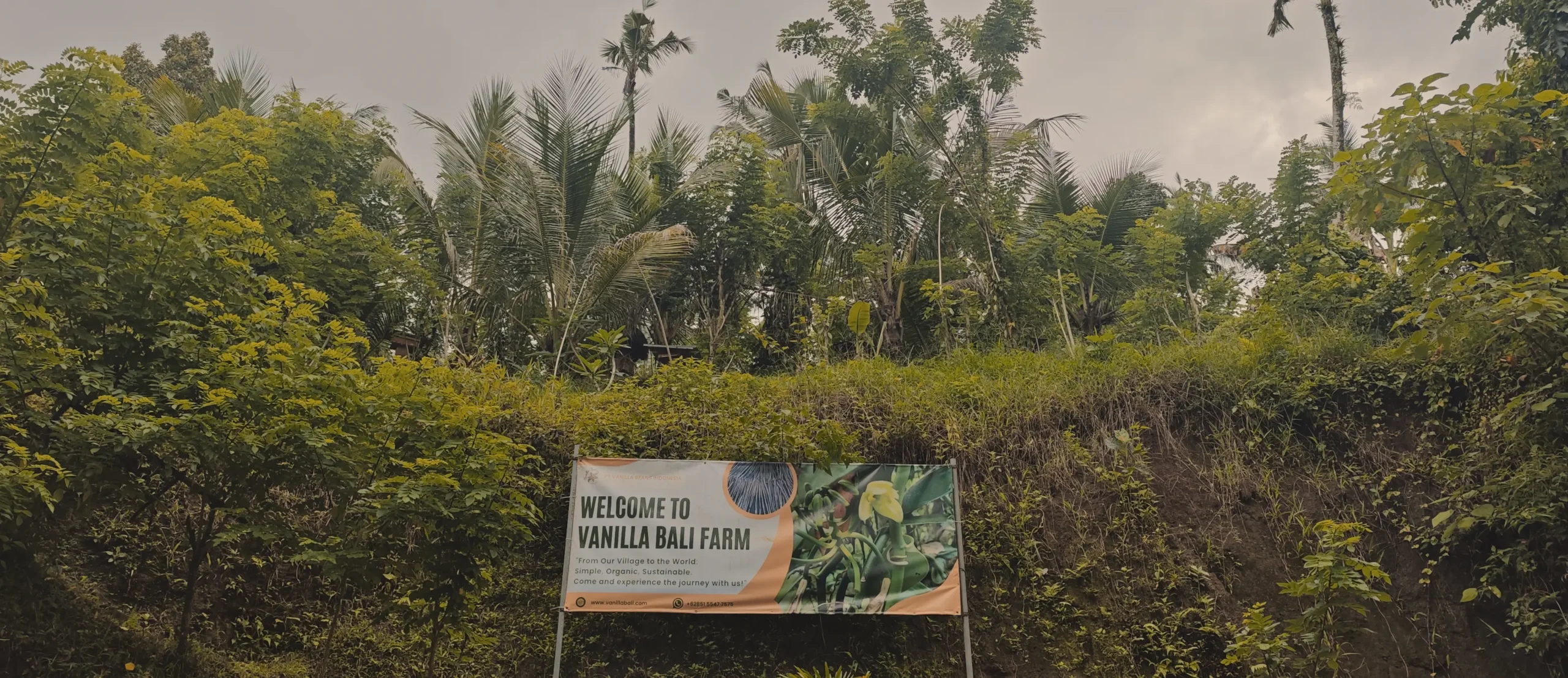
People often ask how long it takes to make a Nalua vanilla bean. The honest answer is: longer than most people expect, and never exactly the same twice. Vanilla doesn’t follow a factory schedule. It follows the farm’s rhythm — the length of the dry season, the timing of the rains, the condition of the vines, and the judgment of Pak Wayan, our sole farmer, who has learned to read all of it. This is what a full year looks like at Nalua Vanilla Bali, from the first work done to the roots to the last bean ready for your shelf.
How Bali's Climate Shapes the Vanilla Farm Calendar
Bali’s tropical climate runs on two seasons: a wet season roughly from October through March, and a dry season from April through September. Vanilla responds to both. The flowering that produces the beans we hand-pollinate is triggered in part by the shift from wet to dry — a natural stress signal that tells the vine it’s time to bloom. Everything on the Nalua farm calendar is planned around that window, and every task before it is preparation to make the most of it when it comes.
The Nalua Farm Calendar, Month by Month
January – March: Vine Care and Growth Management
The wet season keeps the farm lush and growing, which means vine management is the main work during these months. Pak Wayan trains new shoots along the gliricidia trees — locally known as gamal — that serve as both living support poles and canopy shade for the vanilla. Long, mature vines are looped down toward the ground to encourage new vertical growth, a technique that also makes future hand-pollination easier to reach. Weeding, mulching, and canopy adjustments happen throughout this period to maintain the balance of light and humidity the vines need. It is unglamorous, physical work, and it is what makes everything else possible.
April – May: Flowering Season Begins
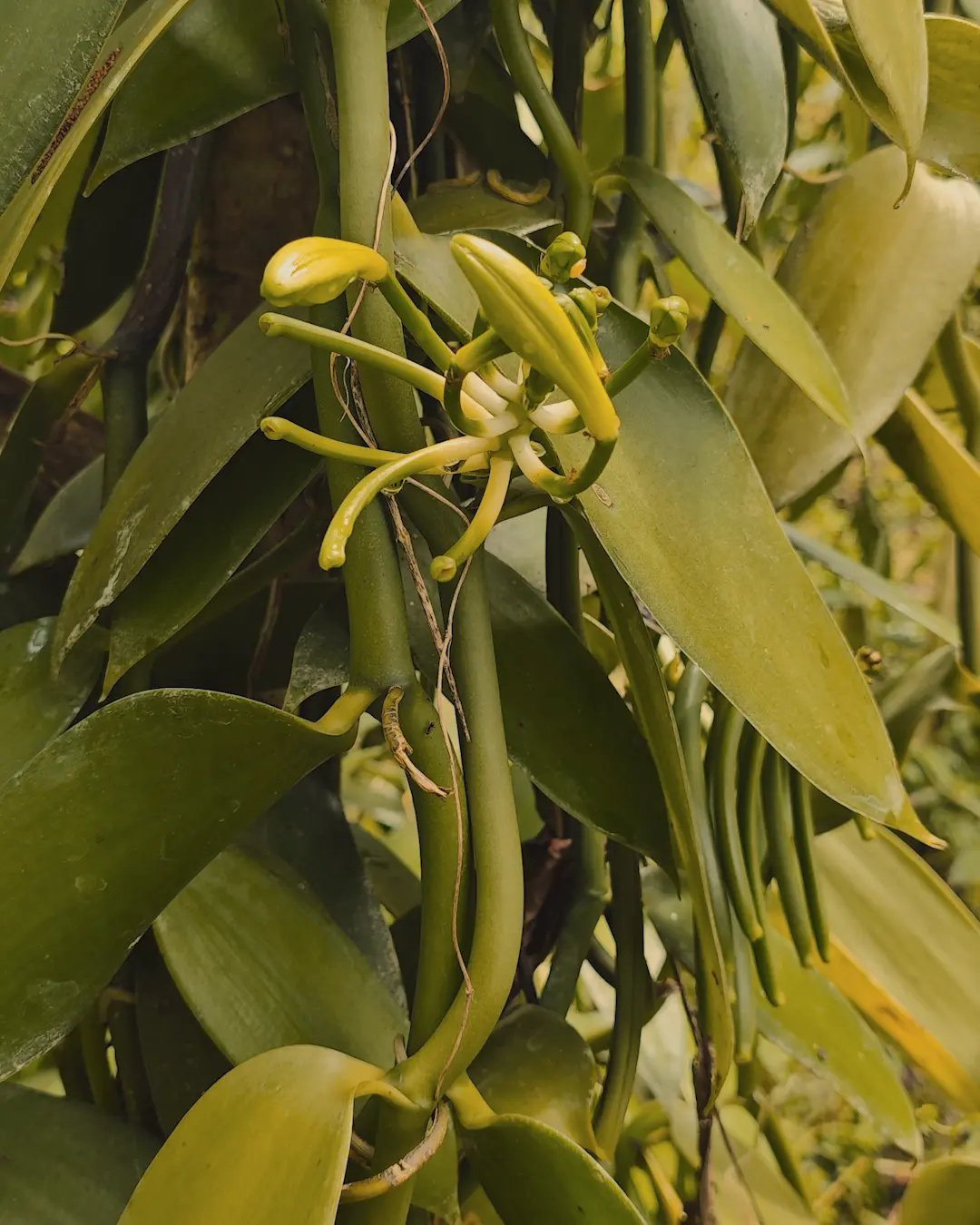
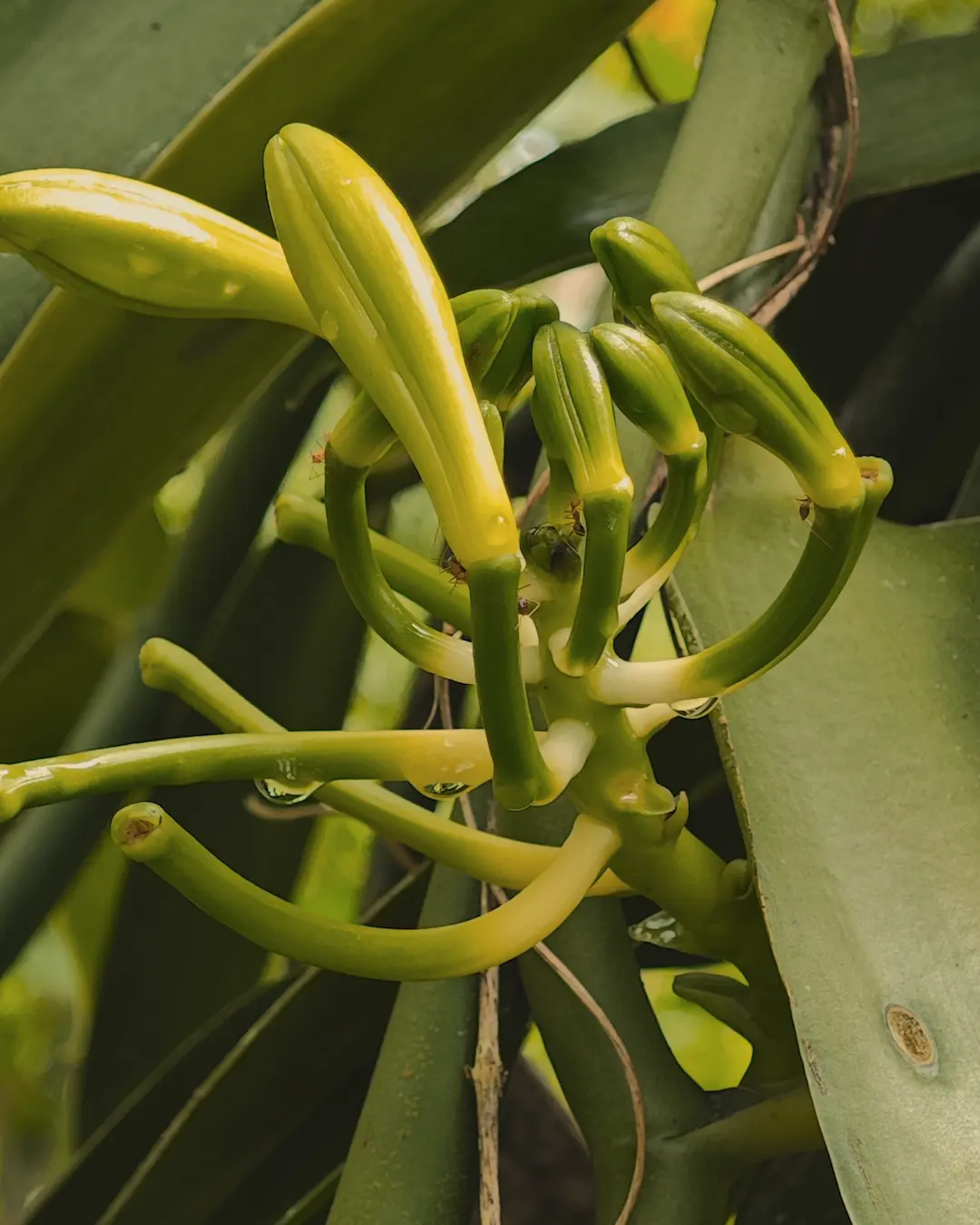
As the wet season eases and the air begins to dry, vanilla vines start producing flowers — clusters of small, pale yellow orchid blooms that open one or two at a time. This is the beginning of the most demanding stretch of the Nalua calendar. Each flower opens for approximately half a day before closing permanently. Miss the window and the flower drops; there’s no second opportunity. During peak flowering, Pak Wayan walks the vines every morning to identify which flowers are ready that day and hand-pollinate them before the window closes. On a productive morning, dozens of flowers are successfully pollinated. On a slow one, only a handful may be ready at all.
June – July: Pod Development and Ongoing Care
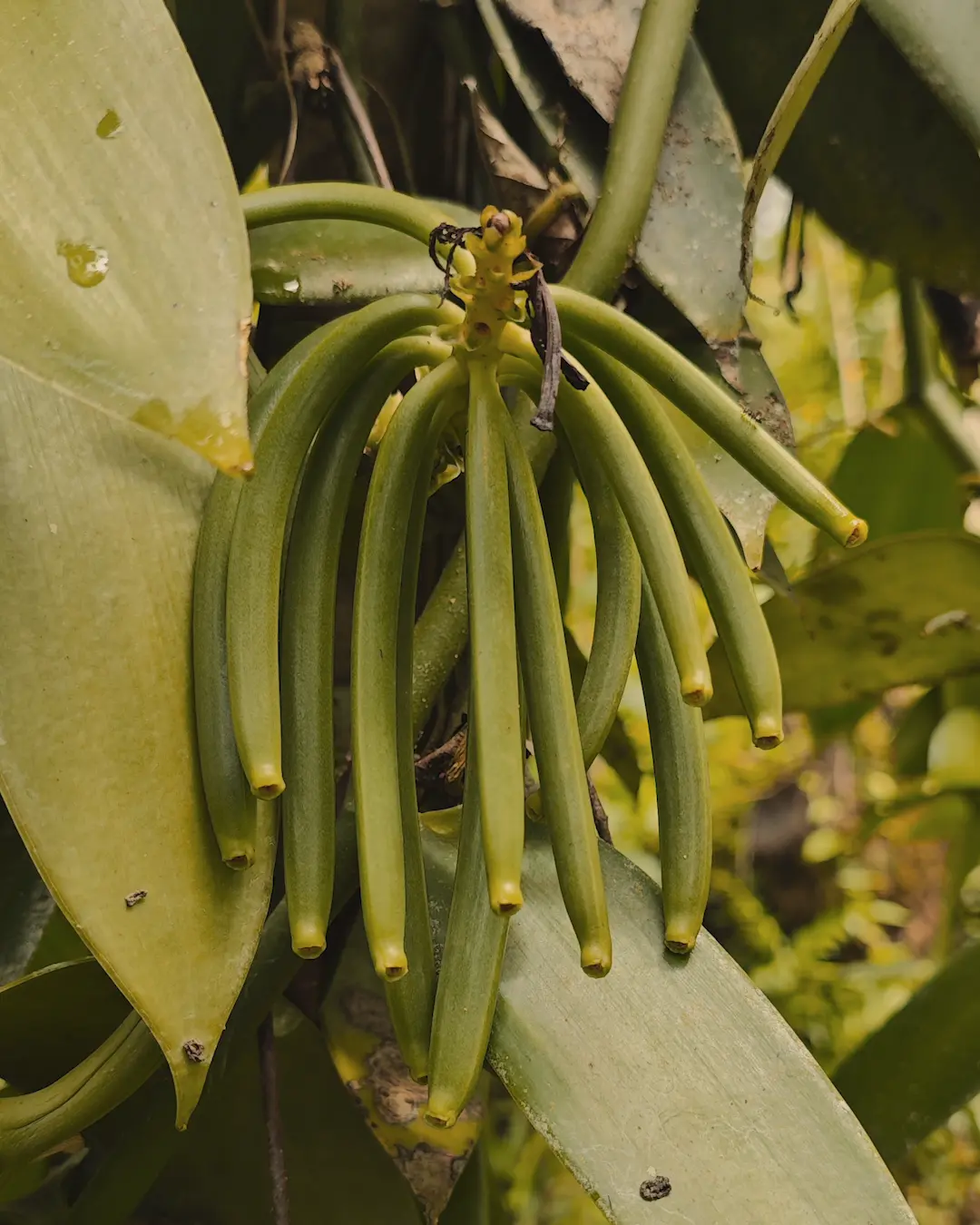
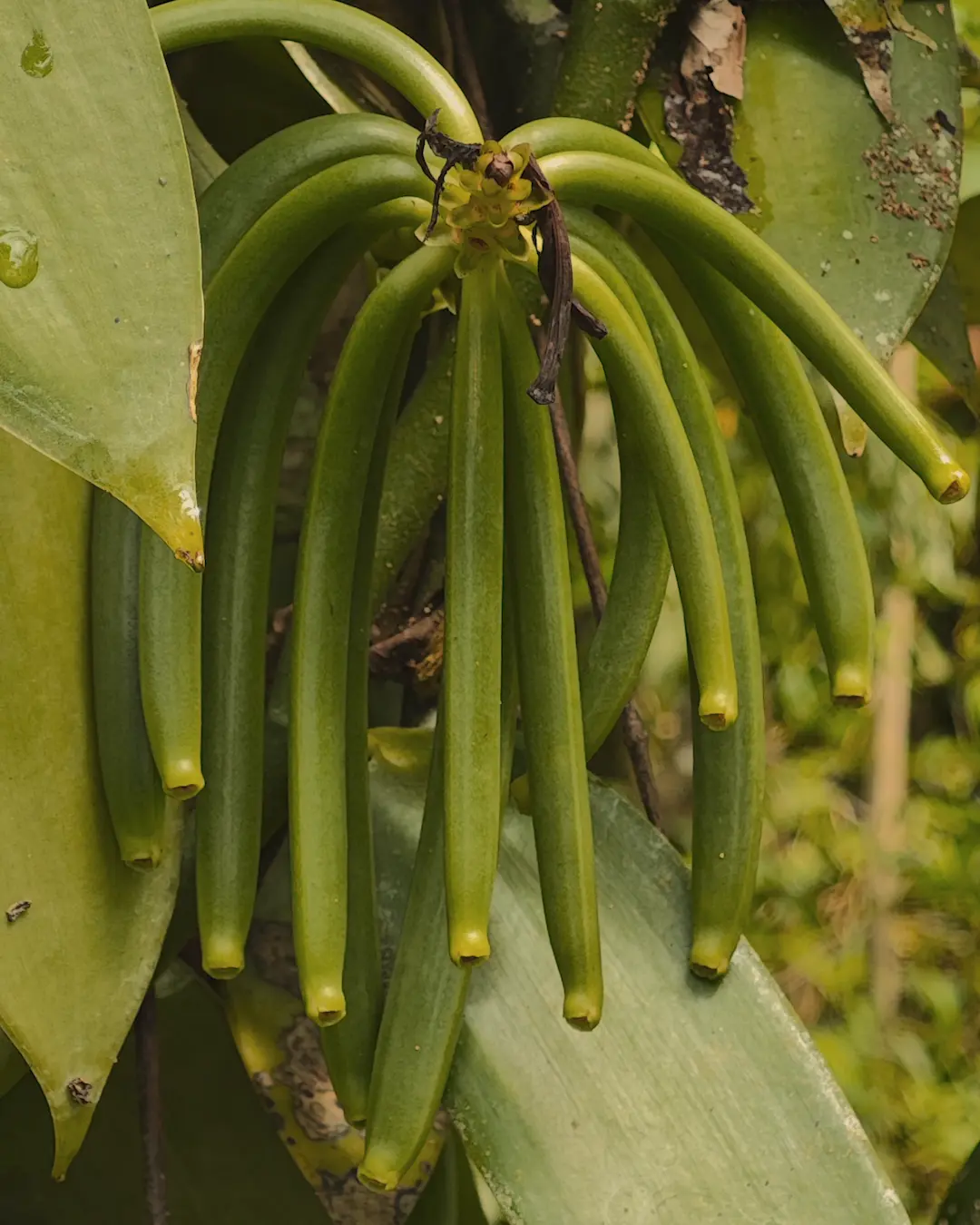
After successful hand-pollination, the flower withers and a small green pod begins to form in its place. These pods — the vanilla beans in their earliest form — are slow to develop. Over the following months they gradually fill out, elongate, and deepen in colour, still attached to the vine and drawing from it. During this phase Pak Wayan continues vine training and monitors the pods for signs of disease or early drop. It is a waiting period, but not an idle one. The farm doesn’t stop working just because the beans aren’t ready yet.
August – September: Pre-Harvest Monitoring
As the dry season peaks, the oldest pods begin to show the first signs of maturity — a slight yellowing at the tip of the bean, which signals that harvest is approaching. Timing matters here. Beans harvested too early haven’t developed their full aromatic profile. Left too long, they risk splitting on the vine. Pak Wayan checks the pods regularly during these months, making individual harvest decisions bean by bean rather than clearing a section all at once. The result is a staggered harvest that prioritises quality over speed.
October – November: Harvest
Harvest at Nalua is not a single event. It happens gradually across several weeks as individual pods reach the right point of maturity, each one picked by hand at the moment Pak Wayan judges it to be ready. Freshly harvested green vanilla beans have almost no detectable vanilla aroma — that only develops during the curing process that follows. What the farm produces at harvest is a bean with full potential, not yet a finished product.
November – December: Curing and Processing
The vanilla curing process is what transforms a green bean into the dark, aromatic product used in kitchens around the world. At Nalua, curing involves a sequence of heat exposure, sweating, and slow drying that breaks down the bean’s cell walls and activates the enzymatic reactions that produce vanillin — the primary aromatic compound responsible for vanilla’s characteristic scent and flavour. The full process takes weeks and requires consistent attention to temperature, moisture, and airflow. Done correctly, the result is a bean that is supple, dark brown, and intensely fragrant. Done incorrectly, it moulds, dries out, or fails to develop properly. Curing is where the harvest becomes a product.
After Curing: From Bean to Nalua Product
Cured beans that meet Nalua’s quality standard go on to become the full range of products we offer: whole vanilla beans sold by grade, vanilla extract, vanilla powder, and vanilla paste. Each product begins with the same hand-pollinated, farm-cured bean. The difference lies in what happens to it afterward — whether it’s sold whole, ground, macerated in alcohol, or blended into paste. No step in that process involves artificial flavouring or shortcuts. The starting point is always a real bean grown on this farm by Pak Wayan’s hands.
Farm Tours: Experience the Calendar Yourself
For those who want to see the farm cycle in person rather than just read about it, Nalua offers private, group, and corporate farm tours. Depending on when you visit, you may see vine training in progress, a flowering season morning walk with Pak Wayan, pods developing on the vine, or beans in various stages of curing. No two visits look exactly alike, because no two months on the farm do either. If you’d like to explore our full range of Nalua vanilla or enquire about a farm tour, you can reach us directly through our website or follow @naluavanillabali for a live look at what the farm is doing right now.
Frequently Asked Questions About the Nalua Farm Calendar
When is vanilla harvested at Nalua?
Harvest at Nalua typically takes place mainly across October and November, with individual beans picked at different times as they each reach the right level of maturity. But the harvest itself could extend throughout the next year because of the difference time in pollination, and beans growth. It’s a gradual process rather than a single-day event.
How long does it take from hand-pollination to a finished vanilla bean?
From the moment a flower is hand-pollinated to the point where a finished, cured bean is ready to use, the process takes close to a year — several months of pod development on the vine, followed by several weeks of curing.
What happens to the vanilla beans after harvest?
Freshly harvested beans go through a curing process involving heat, sweating, and slow drying that develops the aroma and flavour vanilla is known for. Once cured, they become the base for Nalua’s whole beans, extract, powder, and paste products.
Can I visit the Nalua farm?
Yes. Nalua offers private, group, and corporate farm tours. What you’ll see depends on the time of year — some visits coincide with flowering season, others with harvest or curing. Contact us through vanillabali.com or reach out via WhatsApp to arrange a visit.
A vanilla bean from Nalua is the result of an entire year on this farm — every season, every decision, and every morning Pak Wayan walked the vines. That’s what’s in the jar.