
At Nalua Vanilla Bali, every bean begins the same way: with a flower, a fingertip, and a farmer who knows exactly when to act. Our vanilla is 100% hand-pollinated — transferred by hand from the flower’s male anther to its female stigma, with no machines and no shortcuts involved. There is only Pak Wayan, walking the vines before sunrise, and a single flower that will not open again. This is the story of how hand-pollinated vanilla becomes the foundation of everything we grow at Nalua.
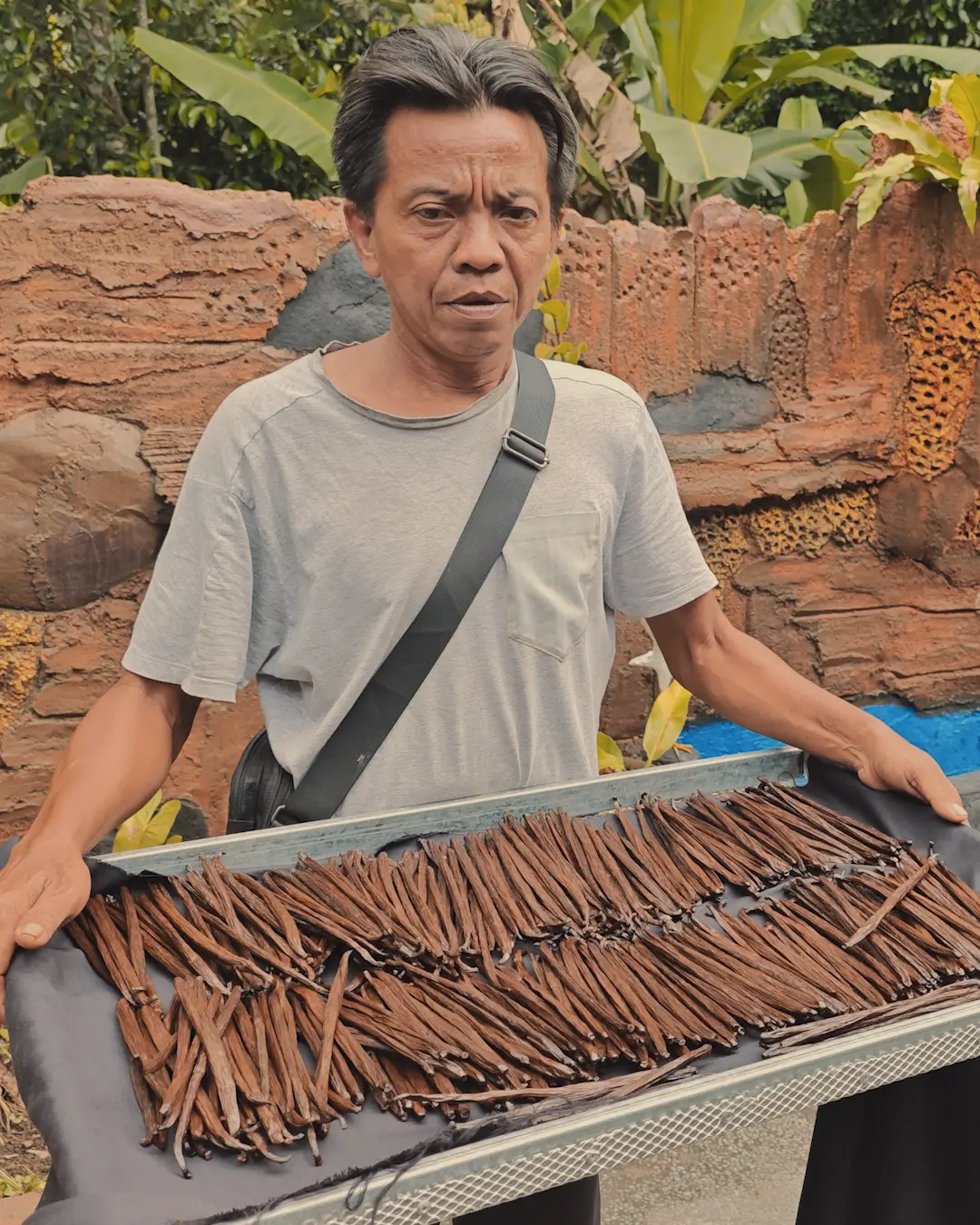
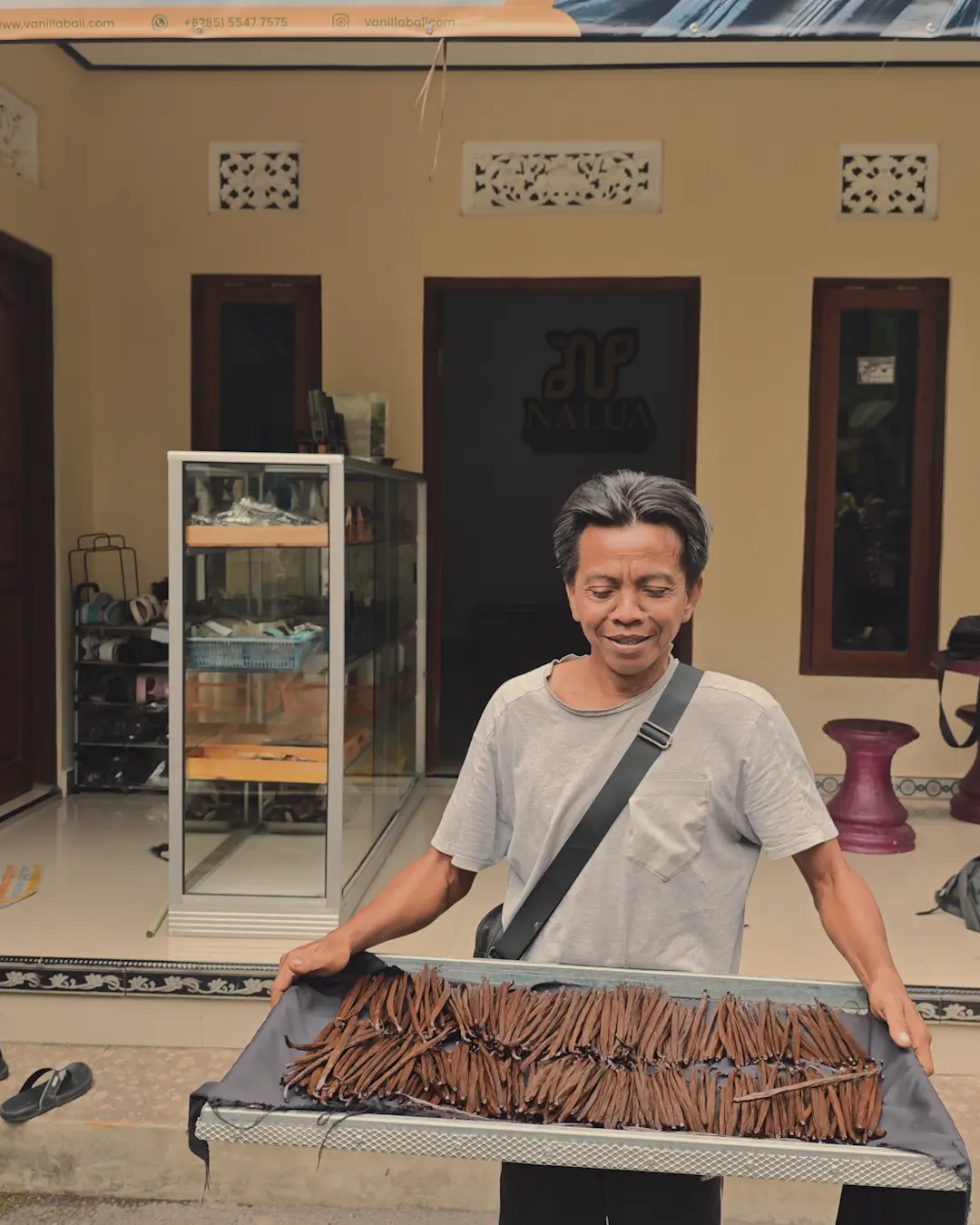
Meet Pak Wayan: Nalua's Hand-Pollination Expert
Every flower on our farm passes through the hands of one person: Pak Wayan, Nalua’s sole farmer and the keeper of a skill that cannot be rushed. Hand-pollination is not a task you can delegate to a machine or a passing visitor — it takes years of practice to recognize a flower at the exact moment it is ready, and a touch light enough not to damage it. Pak Wayan walks the vines daily during flowering season, checking each bloom individually. Some mornings he pollinates a few dozen flowers. Other mornings, none are ready at all.
Why Vanilla Must Be Pollinated by Hand
Vanilla is an orchid, and like most orchids, its flower is built to be pollinated by one very specific creature. In its native Mexico, that creature is the Melipona bee — a stingless bee that doesn’t exist outside the Americas. Outside that narrow range, including here in Bali, vanilla has almost no natural pollinator at all. Without a Melipona bee to do the work, every single flower must be pollinated by hand, or it will never become a bean. This is true for nearly all vanilla grown commercially outside Mexico, from Madagascar to Indonesia.
A 12-Hour Window
Each vanilla flower opens only once, for about half a day, then closes for good — pollinated or not. Miss that window and the flower drops, taking the chance for a bean with it. That single-day deadline is why hand-pollination has to happen early, while the flower is fully open and the relevant parts are easy to reach. There’s no second attempt.
One Touch, One Bean: How Hand-Pollination Works
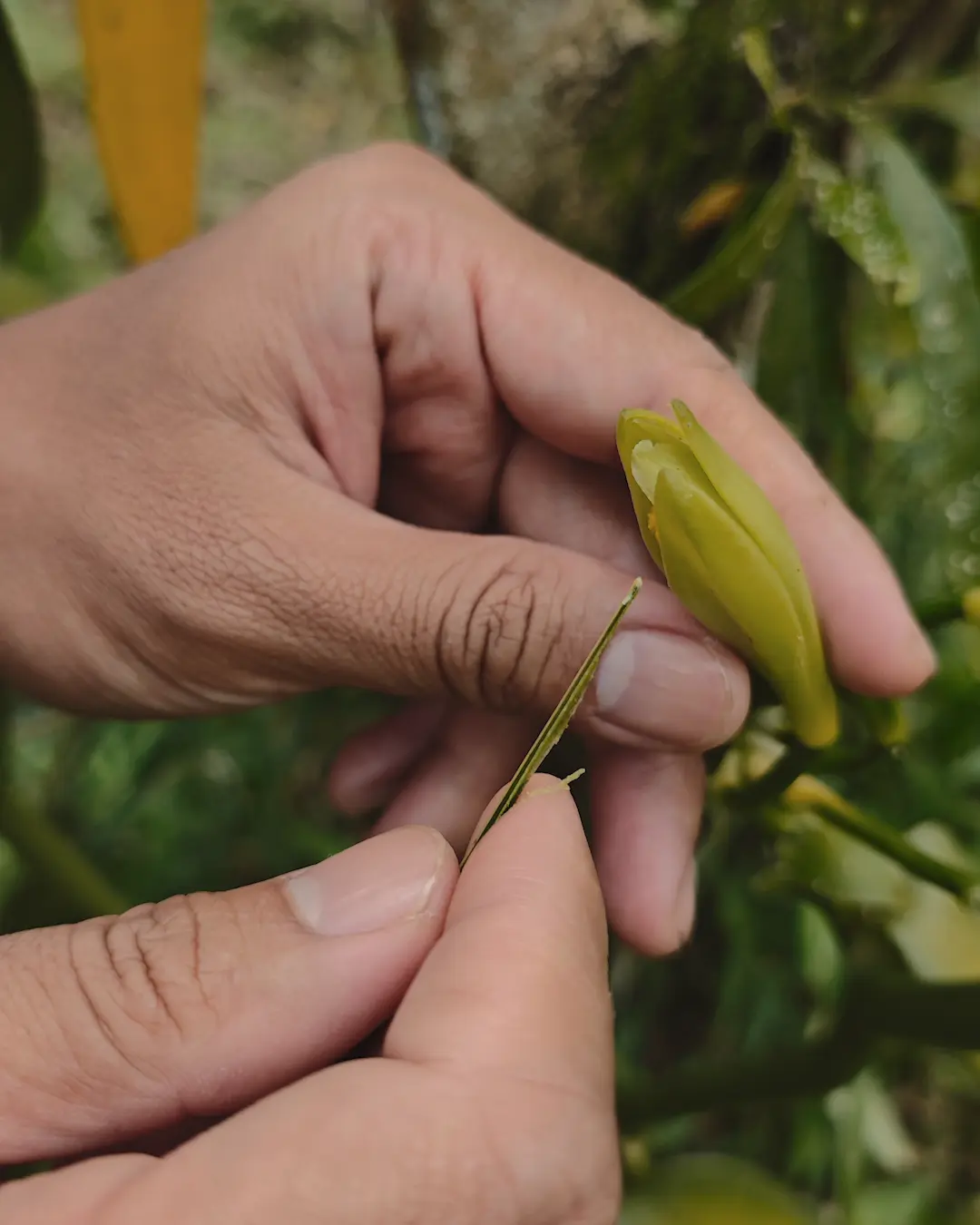
Inside the vanilla flower, a thin membrane called the rostellum separates the male and female parts, keeping them from touching on their own. To hand-pollinate, the farmer lifts this membrane — often with something as simple as a small stick or a thumbnail — and presses the male anther directly against the female stigma. Done correctly, this single touch is enough. Within a day, the flower wilts and falls away, and a small green pod begins to take its place. That pod is the very beginning of a vanilla bean.
Busting the Myth: Do Bees Pollinate Our Vanilla?
Visitors to Nalua often assume our trigona bees are responsible for pollinating the vanilla, especially once they learn we also harvest trigona honey on the farm. It’s an easy assumption, but not an accurate one. Trigona bees are far too small to access a vanilla flower’s reproductive parts, and they show no interest in pollinating it at all. Their role at Nalua is entirely separate, producing the raw trigona honey we sell as Madu Trigona. Every vanilla bean you find in a Nalua product was pollinated by a human hand, not an insect.
Growing Vanilla in Harmony: Our Agroforestry System
Hand-pollination only works if the vines are healthy enough to flower in the first place, which is where our agroforestry system comes in. Vanilla vines at Nalua climb gliricidia trees, locally known as gamal, which serve as living support poles as well as shade. Beneath a canopy of multiple plant layers, the vines get filtered light, steady humidity, and natural windbreaks — conditions close to the ones vanilla evolved under in tropical forest understories. This is not a vanilla monoculture. It’s a small forest, tended carefully enough to produce something this delicate.
From Flower to Bean: What Happens After Pollination
Once a flower is hand-pollinated, the real waiting begins. The pod that forms takes many months to mature on the vine, slowly filling out and changing color before it’s ready to harvest. Even after harvest, the bean isn’t finished — it still has to be cured, a separate process that develops the deep aroma vanilla is known for. From a single hand-pollinated flower to a finished bean ready for use, the timeline is closer to a year than a season.
Taste the Difference Hand-Pollination Makes
Every Nalua product, from our Bali Planifolia and Papua Planifolia beans to our Papua Tahiti and vanilla powder, traces back to the same hand-pollinated flower. It’s slower than relying on machines or chance pollination, but it’s also the only way to grow vanilla this far from where the plant naturally evolved. If you’d like to taste what one farmer’s hands and a season of patience can produce, explore our full range of hand-pollinated vanilla products, or follow @naluavanillabali and #NaluaVanillaBali to see the process as it happens on the farm.
Frequently Asked Questions About Hand-Pollinated Vanilla
Why is vanilla hand-pollinated instead of pollinated by bees?
Vanilla’s natural pollinator, the Melipona bee, is native to Mexico and doesn’t exist in Bali or most other vanilla-growing regions. Without that bee, vanilla flowers need to be pollinated by hand or they won’t develop into beans at all.
How long does it take for a vanilla flower to become a bean?
After hand-pollination, the pod takes several months to mature on the vine, and the cured bean isn’t ready for use until close to a year after the flower first opened.
What makes Nalua's vanilla different?
Every Nalua vanilla bean is hand-pollinated by Pak Wayan and grown within a multi-canopy agroforestry system shaded by gliricidia trees, rather than in a vanilla monoculture. The result is a slower, more deliberate process behind every bean we grow.
Hand-pollination is slow, manual, and impossible to rush — but it’s also the only way Nalua’s vanilla gets made. Every bean starts with Pak Wayan’s hands, and ends on your table.