
Natural vanilla Bali isn’t something you have to be told about — it’s something you notice the moment it’s in your hands. The colour, the weight, the way the bean bends without snapping, the scent that rises before you’ve even opened the jar completely. Nalua Vanilla Bali exists at that intersection of land, craft, and time — three things that synthetic vanilla, however convincingly labelled, cannot replicate. This post is about what that difference actually looks, feels, and smells like, and why it matters.
What Real Vanilla Looks Like
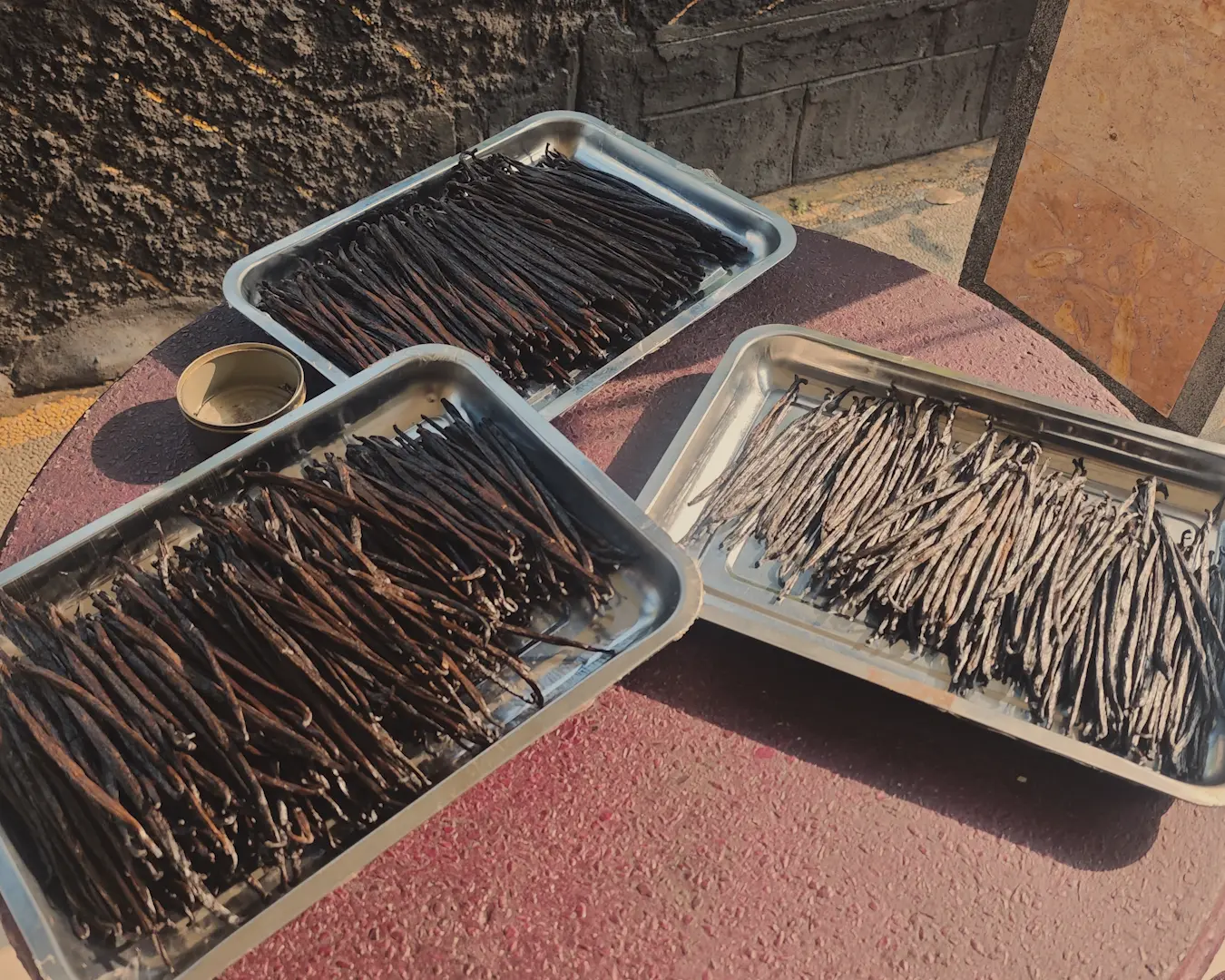
A genuine vanilla bean from Nalua is dark — almost mahogany, sometimes nearly black — with a surface that catches the light in a soft, uneven way. It’s not glossy. It’s not uniform. Real vanilla doesn’t come out of a machine calibrated for visual consistency. What you’re looking at is a pod that grew slowly on a vine in Bali, was hand-pollinated by Pak Wayan during a half-day window when the flower was open, then spent weeks being slowly cured until the colour deepened and the aromatics locked in.
Frost on the Bean: What It Means
On a well-cured vanilla bean, you may notice a faint white crystalline dusting on the surface. This is called givre — a natural bloom of vanillin crystals that forms during the curing process. Far from being a defect, it’s one of the most reliable indicators that a bean has been cured properly and long enough for its aromatic compounds to fully develop. It’s what real, unhurried vanilla looks like up close. If you see it on a Nalua bean, that’s the process working exactly as it should.
What Real Vanilla Feels Like
Pick up a natural vanilla Bali bean from Nalua and it should feel substantial — not brittle, not papery, not hollow. A well-cured bean has enough residual moisture to be supple and pliable, bending slowly in your fingers without cracking. Run a thumbnail along the length of it and it opens cleanly, revealing the dense seed caviar inside: thousands of tiny black seeds suspended in a sticky, fragrant paste. That paste is where much of the flavour lives. It doesn’t rinse off easily. It stays on your fingers, on the knife, on whatever it touches — because it’s real, and real vanilla has presence.
Seeds, Pod, and Everything Between
When you split a Nalua vanilla bean, nothing goes to waste. The seeds go into the batter, the custard, the cream. The empty pod goes into a jar of sugar to slowly infuse it over weeks. Dropped into a simmering sauce, the spent pod continues to give. This is the difference between a product designed to be used up and one designed to be appreciated. Natural vanilla Bali gives more than one return on the investment of a single bean.
What Real Vanilla Smells Like
The scent of a Nalua vanilla bean is not the vanilla you know from a bottle of essence. That fragrance — clean, sweet, linear — comes from synthetic vanillin, a compound produced industrially from sources including lignin and petrochemicals. It smells like one thing: the idea of vanilla. A real, cured natural vanilla Bali bean smells like many things at once: warm wood, dried fruit, a faint earthiness, something almost smoky beneath the sweetness, and yes — vanilla, but richer and less predictable than any synthetic version of it. The complexity is a by-product of the curing process and the specific character of the beans grown on our Bali farm.
Why Nalua's Vanilla Smells Different from Other Origins
Vanilla grown in different regions develops different aromatic profiles, shaped by soil, climate, and the specific variety of the plant. Nalua grows both Planifolia and Tahitensis varieties — the former producing the bold, classic vanilla profile most people recognise, the latter tending toward softer, more floral notes with a hint of anise. Both are grown on the same Bali farm, cured by the same hands, and reflect the same piece of land. The difference in scent between them is the difference in what the plant absorbed from the ground it grew in.
What "Natural" Actually Means at Nalua
Natural vanilla Bali, as Nalua grows it, means no synthetic flavouring, no artificial fragrance, no shortcuts in the curing process. It means one farmer — Pak Wayan — hand-pollinating every flower on the vine during a narrow daily window, and tending the same vines within a multi-canopy agroforestry system shaded by gliricidia trees. It means a bean that takes close to a year to go from flower to finished product. “Natural” at Nalua isn’t a label chosen for marketing. It’s a description of how the farm actually operates, and what that operation produces.
Experiencing Nalua in Person
If you’d like to understand what natural vanilla Bali looks and feels like before committing to an order, Nalua’s farm tours offer exactly that. Private, group, and corporate visits are available — and depending on the season, you may witness hand-pollination in progress, pods developing on the vine, or beans mid-cure. It’s one thing to read about the process. It’s another to hold a freshly harvested pod and notice that, at this stage, it barely smells of vanilla at all — and understand from that moment why the curing process exists. To explore Nalua’s full vanilla range or arrange a tour, visit us at vanillabali.com or follow @naluavanillabali to watch the farm across every season.
Frequently Asked Questions About Natural Vanilla
How can I tell if vanilla is real or synthetic?
Real vanilla beans are dark, supple, and fragrant with a complex scent that includes warm, woody, and fruity notes beyond simple sweetness. Synthetic vanilla essence typically smells one-dimensional and sharp by comparison. In extract form, real vanilla produces a dark brown liquid with visible specks; synthetic versions are usually clear or pale.
What is the white powder on a vanilla bean?
It’s called givre — a natural crystalline bloom of vanillin that forms on well-cured beans. It’s a sign of quality and proper curing, not mould or spoilage. Mould, by contrast, is fuzzy and appears on beans that have been stored with too much moisture.
What's the difference between Planifolia and Tahitensis vanilla?
Planifolia is the variety behind most of the world’s commercial vanilla — bold, warm, and classic in flavour. Tahitensis tends to produce a softer, more floral profile with subtle anise-like notes. Nalua grows both on the same Bali farm, cured through the same process.
Is Nalua's vanilla organic?
Nalua’s farm operates as a traditional agroforestry system without synthetic inputs, growing vanilla alongside gliricidia shade trees in a multi-canopy environment. For specific certification queries, reach out to us directly through vanillabali.com.
Real vanilla doesn’t announce itself. It simply smells, feels, and tastes like something that took a long time and a great deal of care to become what it is — and nothing synthetic has ever quite managed to replicate that.