
Nalua Vanilla Bali founders Dio and Citra didn’t come from farming. They came from offices — from schedules, screens, and the particular kind of exhaustion that builds slowly in a life that doesn’t quite fit. What brought them to a vanilla farm in Bali wasn’t an inheritance or an agricultural background. It was a smell. It was the scent rising from Citra’s kitchen on a weekend afternoon, from a cake just pulled from the oven, from a bean she had split open on the counter and thought: why don’t we know more about where this comes from?
That question didn’t let go. And eventually, it became Nalua.
Two People, One Kitchen, One Question
Where It Started — With Baking
While working full-time as an office professional, Citra spent her weekends baking. Not as a side business or a calculated venture, but as the kind of hobby that absorbs you completely — the measuring, the folding, the patience of waiting for something to rise. Vanilla was always there, in the background of nearly every recipe she loved. The flavour that made a simple cake taste considered. The aroma that made a kitchen feel like somewhere worth being.
The more she baked with vanilla, the more she noticed the difference between what real vanilla did to a recipe and what the synthetic essence she sometimes reached for could only approximate. Real vanilla wasn’t just a flavour. It was a presence — warm, layered, and unmistakably alive in a way that no bottle of clear essence could replicate. That observation planted something in her mind that she couldn’t quite shake.
Dio and the Decision to Build
Citra didn’t arrive at Nalua alone. Dio was beside her at every step of the transition — from the earliest conversations about what it would mean to leave office life behind, to the practical work of building a farm from the ground up. His role wasn’t peripheral. Both Dio and Citra shaped Nalua into what it is today: a farm that produces premium, natural vanilla with the same care and attention that goes into anything genuinely worth making. Where Citra brought the original spark — a baker’s intimate knowledge of what good vanilla should taste and smell like — Dio brought the commitment to see it through.
Why Natural and Ethical Farming Was Never Optional
For Dio and Citra, the decision to farm vanilla naturally wasn’t a marketing position. It came directly from where the idea began. If you start a vanilla farm because you fell in love with what real vanilla tastes like, then growing it with synthetic shortcuts would undermine the entire point. From the beginning, Nalua was built around a single commitment: to produce vanilla the way it deserves to be produced — grown without artificial inputs, hand-pollinated one flower at a time, and processed slowly enough to do justice to what the plant is actually capable of.
Ethical Farming as a Foundation, Not a Feature
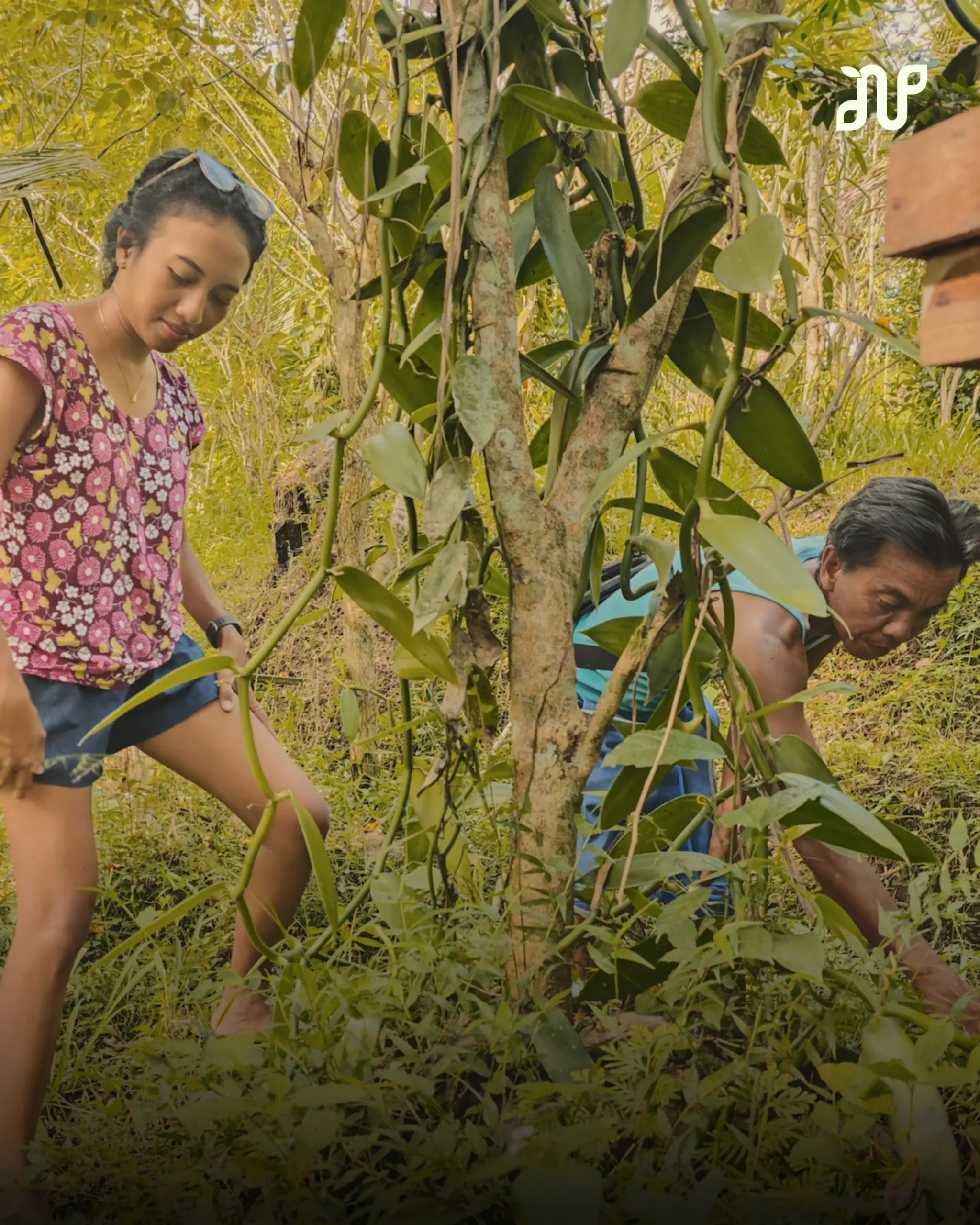
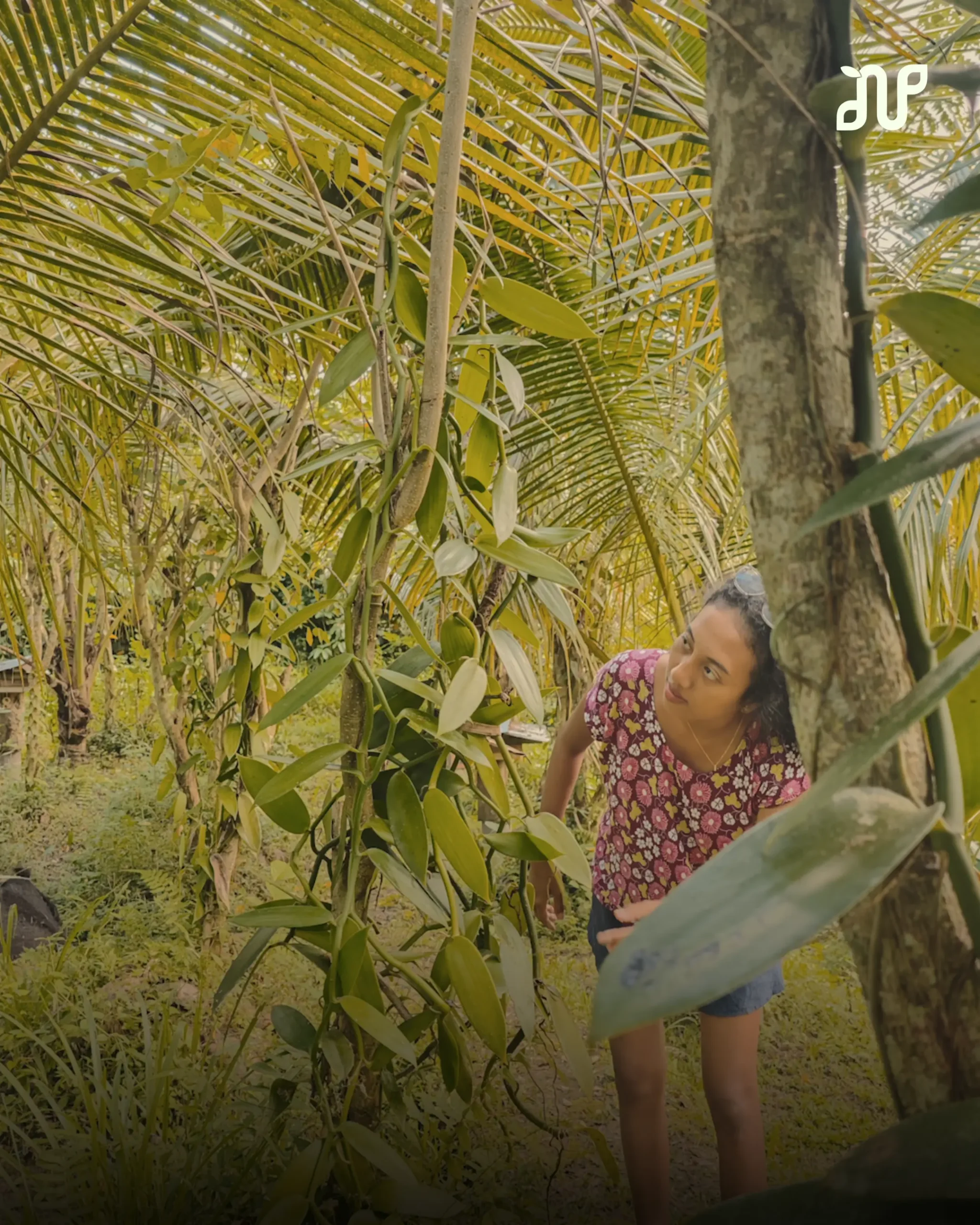
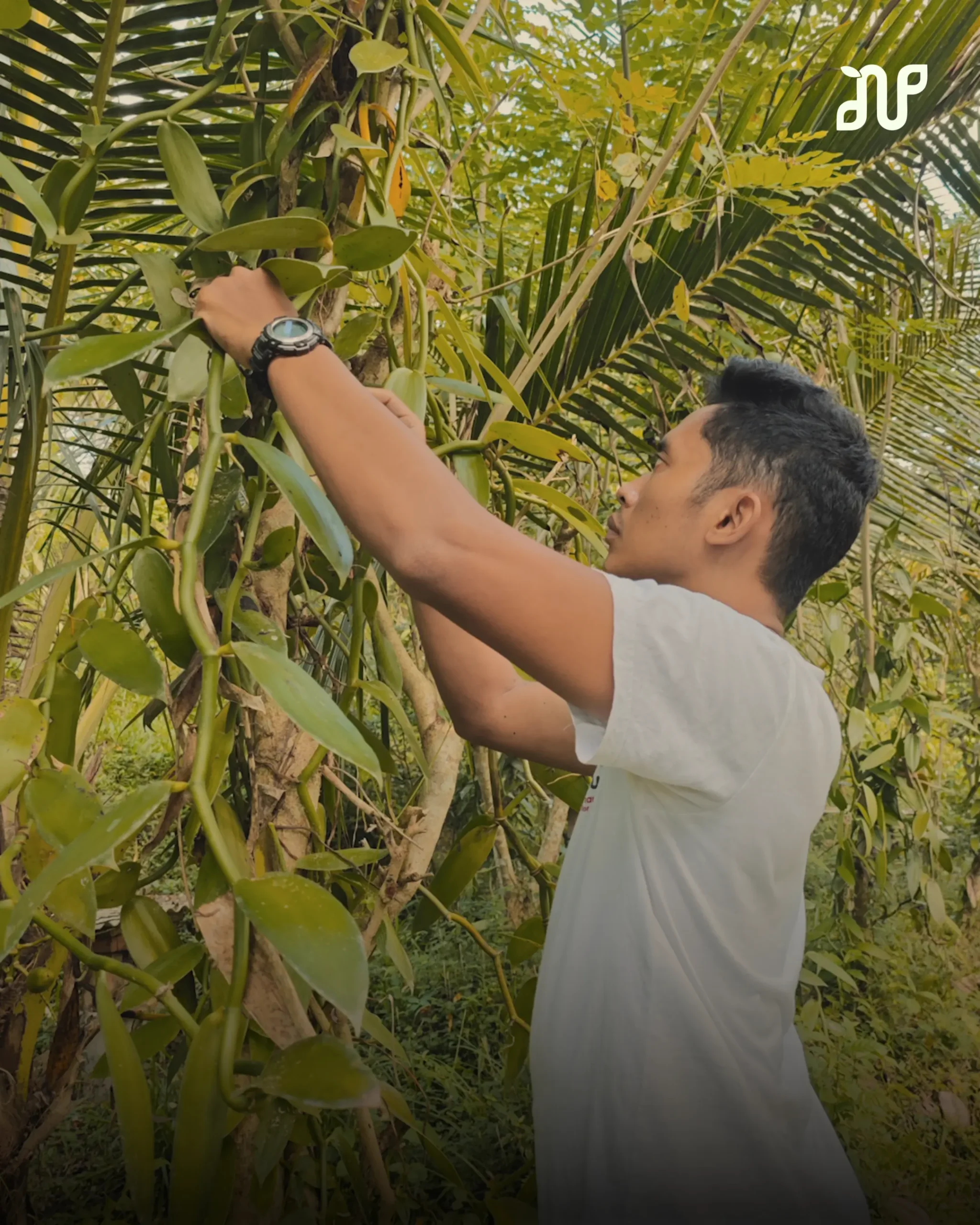
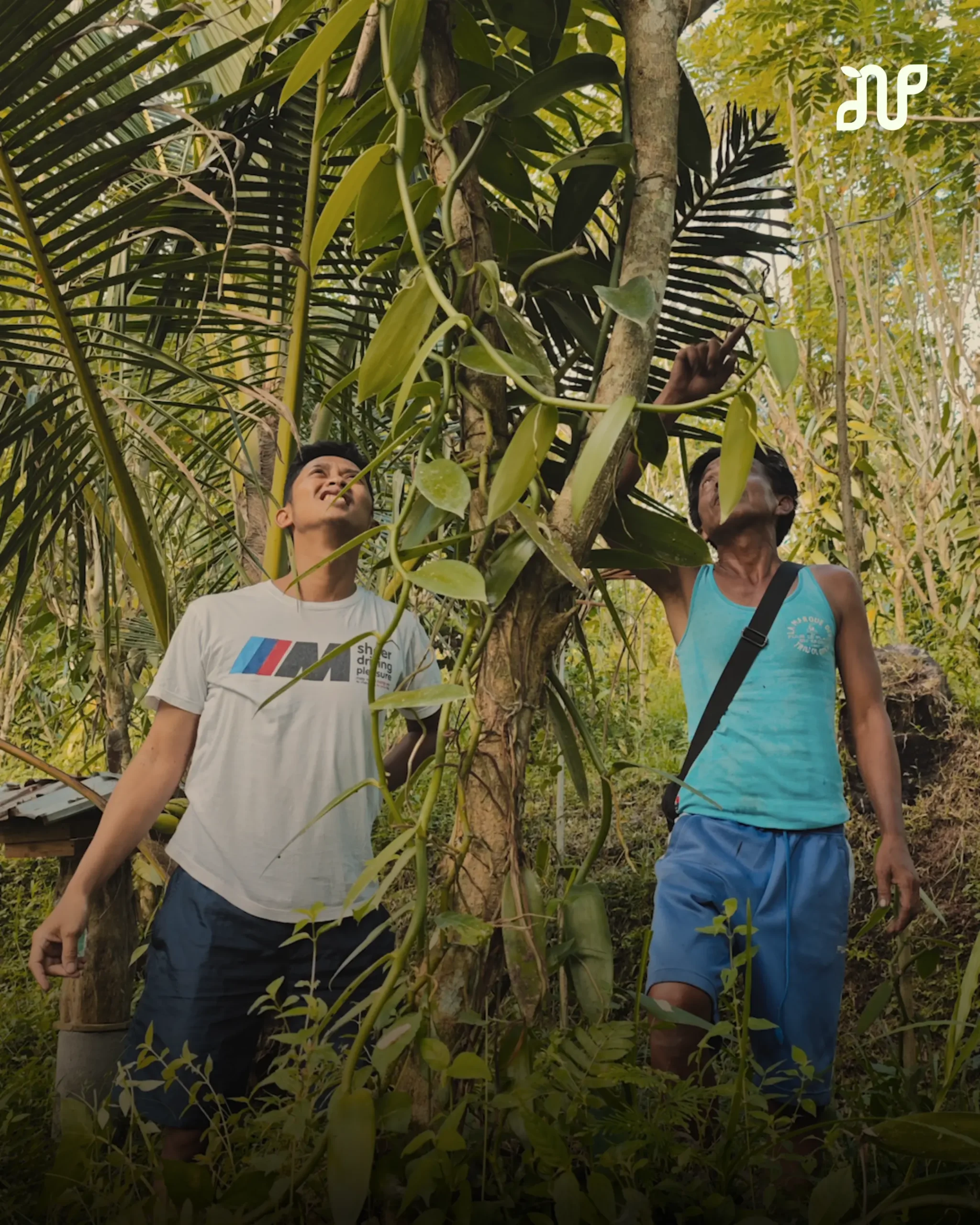
That commitment extends beyond the product itself. Nalua’s farm operates as a multi-canopy agroforestry system — vanilla vines climbing gliricidia shade trees in a layered, living environment rather than a stripped-back monoculture. Pak Wayan, the farm’s sole farmer, is the person whose hands do the most intimate work on the farm each day: hand-pollinating every flower, monitoring every pod, and making the harvest decisions that no machine or algorithm could replicate. The relationship between the founders and Pak Wayan isn’t a business arrangement built for optics. It’s a working partnership built on mutual respect for what the land can produce when it’s treated carefully.
What Dio and Citra Are Building Towards
A Farm That Stands for Something
Nalua is not trying to compete on volume. Dio and Citra have never been interested in scaling the farm to the point where the things that make it meaningful — the hand-pollination, the single farmer, the unhurried curing process — would have to be compromised to meet demand. What they are building is a farm with a clear identity: one that produces a limited quantity of exceptional vanilla and stands behind every bean it sells with complete transparency about how it was grown.
In an industry where “natural” and “pure” are terms that can be applied liberally and with very little accountability, Dio and Citra’s approach is to let the product speak. The way a Nalua bean looks, feels, and smells when you hold it — that is the argument. Not a label. Not a certification. The bean itself.
From a Kitchen Hobby to a Living Farm
There is something worth sitting with in the origin of Nalua: that it began not with a business plan or an investment thesis, but with someone baking a cake on a Saturday and paying close enough attention to the vanilla in the bowl to wonder where it came from and whether it could be better. Most people have had that moment in some form — a sudden curiosity about the origin of something they’ve always taken for granted. Dio and Citra are the people who followed that curiosity all the way to a farm in Bali and built something real from it.
If you want to taste what that decision produced, you can explore everything Nalua grows — from whole vanilla beans and extract to vanilla powder — at vanillabali.com. Or follow @naluavanillabali to watch the farm, the vines, and the people behind it, season by season.