
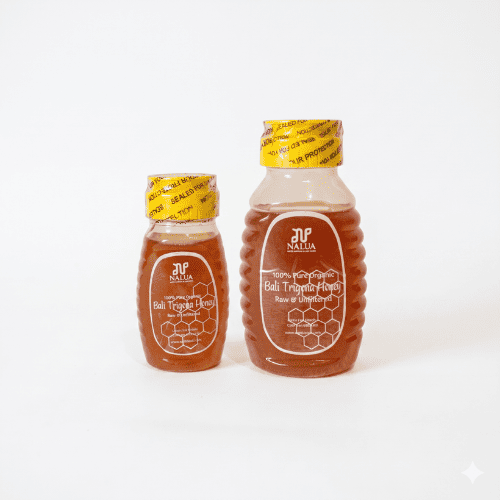
If you’ve ever tasted Trigona honey for the first time, you already know
the surprise: it’s tangy, complex, and unmistakably sour. Unlike the sweet, thick honeys
most people are familiar with, the sourness in Trigona honey is one of
its most distinctive — and most misunderstood — characteristics. Far from being a sign of
spoilage, that tartness is actually proof of purity, live enzymes, and exceptional nutritional
value. In this article, we’ll explore exactly why Trigona honey tastes sour, what causes
it scientifically, and why that sourness is something to celebrate.
What Is Trigona Honey?
Trigona honey — also known as stingless bee honey or
Meliponini honey — is produced by a group of small, tropical bees that belong
to the tribe Meliponini. These bees are found across Southeast Asia, South America,
Africa, and Australia. In Indonesia, species such as Trigona itama,
Trigona laeviceps, and Trigona thoracica are among the most commonly
farmed for their prized honey.
Unlike conventional honeybees (Apis mellifera), stingless bees store their
honey in small resin-coated pots rather than wax combs. This unique storage method,
combined with the bees’ foraging behavior and enzymatic activity, directly contributes
to Trigona honey’s characteristic sour and tangy flavor profile.
The Science Behind Trigona Honey Sourness
The sourness of Trigona honey is not accidental — it is the result of
several measurable biochemical processes. Understanding these processes helps explain
why authentic, high-quality Trigona honey consistently tastes tart.
1. High Organic Acid Content
One of the primary drivers of Trigona honey’s sour taste is its remarkably high
concentration of organic acids. Research has shown that stingless bee
honey contains significantly higher levels of gluconic acid, malic acid, citric acid,
lactic acid, and acetic acid compared to conventional bee honey.
Gluconic acid, in particular, is produced when glucose oxidase — an enzyme introduced
by the bees — breaks down glucose in the nectar. This enzymatic reaction is far more
active in Trigona honey than in standard honey, resulting in a naturally lower pH and
a pronounced sour taste.
2. Lower pH Level
The pH of regular honeybee honey typically ranges between 3.9 and 4.5. Trigona
honey, however, often has a pH between 2.5 and 3.9 — making it notably more
acidic. This lower pH is a hallmark of authenticity and is directly responsible for
the tangy, sour flavor that distinguishes it from other honey varieties.
Importantly, this acidity also contributes to Trigona honey’s exceptional
antimicrobial properties and long shelf life without the need for
preservatives.
3. High Moisture Content and Natural Fermentation
Trigona honey has a higher natural moisture content than conventional honey — typically
ranging from 20% to 35%, compared to 17–20% in regular honey.
This elevated moisture level encourages a mild, controlled natural fermentation process
within the honey pots. During fermentation, naturally occurring yeasts and lactic acid
bacteria produce additional organic acids, further deepening the sour notes in
the honey’s flavor.
This mild fermentation is a normal and desirable feature of raw Trigona honey —
similar to how fermented foods like yogurt and kimchi develop complex, tangy flavors
through beneficial microbial activity.
4. Propolis and Resin Compounds
Stingless bees use propolis — a resinous compound collected from
tree buds and bark — to seal and coat their honey pots. Propolis is rich in phenolic
compounds and flavonoids, some of which contribute to the bitter and sour undertones
in Trigona honey. This resinous influence adds a layer of complexity to the sourness
that goes beyond simple acidity.
5. Diverse Floral Sources
Trigona bees are opportunistic foragers with a wide range of floral sources, including
fruits, wild flowers, and tropical plants. The varied nectar sources they visit often
carry naturally acidic compounds — such as those found in citrus flowers, wild
tamarind, and tropical fruit blossoms — which carry through into the honey’s
final flavor and sourness.
Is Sour Trigona Honey Safe to Eat?
Absolutely. The sourness in Trigona honey is a completely natural
characteristic and is not a sign of spoilage. In fact, the opposite is true:
honey that has lost its natural sourness — through heating, over-processing, or
adulteration — has actually lost some of its key beneficial properties.
Authentic raw Trigona honey that tastes sour is:
 Rich in live enzymes that support digestion
- Naturally antimicrobial due to its low pH and organic acids
- High in antioxidants from propolis and polyphenols
- Unheated and unfiltered — preserving all bioactive compounds
- Free from artificial additives
 Rich in live enzymes that support digestion
If your Trigona honey does not taste sour or tangy at all, it may have been
diluted, blended, or heated — all of which degrade its natural properties.
Health Benefits Linked to Trigona Honey’s Natural Sourness
The acids that give Trigona honey its sour taste are directly tied to
many of its most celebrated health benefits:
Supports Digestive Health
The organic acids in Trigona honey — particularly lactic acid and gluconic acid —
help maintain a healthy pH balance in the digestive tract. These acids support the
growth of beneficial gut bacteria, making Trigona honey a natural prebiotic that
promotes a balanced gut microbiome.
Powerful Antimicrobial Activity
The naturally low pH created by the organic acids creates an inhospitable environment
for harmful pathogens. Studies have shown that Trigona honey demonstrates strong
antimicrobial activity against bacteria including Staphylococcus aureus
and E. coli, partly attributed to its acidic composition.
Rich in Antioxidants
The phenolic compounds and flavonoids in Trigona honey — many of which contribute to
its complex sour flavor — are potent antioxidants. These compounds help neutralize
free radicals, reduce oxidative stress, and support immune function.
Supports Wound Healing
The acidic environment of Trigona honey, combined with its hydrogen peroxide content
and propolis components, makes it effective for topical wound care. Its low pH
discourages bacterial growth on wounds while promoting tissue regeneration.
Natural Energy and Metabolism Support
Organic acids like gluconic acid play a role in cellular energy metabolism. Regular
consumption of small amounts of Trigona honey is traditionally used across Southeast
Asia as a natural tonic for energy, endurance, and overall vitality.
How Sour Should Authentic Trigona Honey Taste?
The intensity of Trigona honey sourness varies depending on several
factors, including:
- Bee species — different Trigona species produce honey with
varying acidity levels - Floral source — honey from fruit-rich or tropical forest regions
tends to be more tart - Harvest season — honey harvested during dry seasons may have
higher concentration of acids - Storage time — older honey may develop a more pronounced sour
character as fermentation continues - Processing method — raw, unheated honey retains more natural
acidity than processed versions
A quality Trigona honey should taste pleasantly sour — similar to a mild fruit vinegar
or natural kombucha — with floral, earthy, or slightly resinous undertones. Extremely
sharp sourness combined with an off-putting odor could indicate over-fermentation;
however, this is rare in properly harvested honey.
How to Use Sour Trigona Honey
The natural sourness of Trigona honey makes it a versatile ingredient
in both health routines and culinary applications. Here are some popular ways to
enjoy it:
- Morning tonic — mix 1 teaspoon in warm water with a squeeze
of lime for a digestive-boosting start to the day - Salad dressing — use as a natural sweetener-acidifier in
vinaigrettes, balancing flavors beautifully - Skin mask — apply directly to the face for 10–15 minutes
as a natural antimicrobial and brightening treatment - Tea sweetener — add to herbal or green tea; the sour notes
complement floral and earthy teas well - Marinade ingredient — works wonderfully in meat or tofu
marinades, adding depth and natural tenderizing acids - Direct consumption — take 1–2 teaspoons daily as a
natural health supplement
 Morning tonic — mix 1 teaspoon in warm water with a squeeze
 Salad dressing — use as a natural sweetener-acidifier in
 Skin mask — apply directly to the face for 10–15 minutes
 Tea sweetener — add to herbal or green tea; the sour notes
 Marinade ingredient — works wonderfully in meat or tofu
 Direct consumption — take 1–2 teaspoons daily as a
How to Identify Authentic Trigona Honey by Its Sourness
Because Trigona honey commands a premium price, the market unfortunately sees
adulterated products. Here’s how you can use sourness as an authenticity
indicator:
- Taste test: Genuine Trigona honey has an unmistakable sour-tangy
flavor. If it only tastes sweet, be skeptical. - pH test: Use a simple pH strip. Authentic Trigona honey
will test between 2.5 and 3.9. - Texture: It is typically runnier than regular honey due to
its higher moisture content. - Aroma: A slight fermented, floral, or resinous scent is normal
and desirable. - Source transparency: Buy from trusted beekeepers who can
identify the species and harvest location.
 Taste test: Genuine Trigona honey has an unmistakable sour-tangy
Frequently Asked Questions About Trigona Honey Sourness
Why does Trigona honey taste sour?
Trigona honey tastes sour because of its naturally high organic acid content —
particularly gluconic acid, lactic acid, and malic acid — combined with a lower pH
(between 2.5–3.9) compared to regular honey. These acids are produced by enzymatic
activity and mild natural fermentation inside the honey pots.
Is sour Trigona honey still good to eat?
Yes. Sourness is a natural and desirable characteristic of genuine, raw Trigona honey.
It signals high acidity, live enzymes, and authentic processing. Honey that is not
sour may have been diluted, heated, or adulterated.
Does the sourness of Trigona honey mean it is fermented?
Partially, yes. Trigona honey undergoes a mild, natural fermentation process due to
its higher moisture content and naturally occurring yeasts and bacteria. This mild
fermentation is entirely safe and contributes to the honey’s unique flavor and
probiotic-like properties.
How sour should Trigona honey be?
Authentic Trigona honey should have a pleasantly tart, tangy flavor — comparable to
natural kombucha or mild fruit vinegar. The exact level of sourness varies by species,
floral source, and harvest season.
Can I reduce the sourness of Trigona honey?
You can mix Trigona honey into warm drinks or foods to mellow the sourness, but heating
it above 40°C (104°F) will destroy its live enzymes and reduce its health benefits.
For best results, enjoy it raw or at room temperature.
Is Trigona honey better than regular honey?
Trigona honey offers a different nutritional profile compared to regular honeybee
honey. It is generally richer in organic acids, antioxidants, and antimicrobial
compounds — partly because of the very sourness that makes it distinctive.
Conclusion: Embrace the Sour — It’s a Sign of Quality
The sourness in Trigona honey is not a flaw — it is a feature.
It is the result of centuries of natural bee evolution, enzymatic chemistry, and
the unique behavior of stingless bees in tropical ecosystems. Every tangy, complex
sip of authentic Trigona honey carries with it organic acids, live enzymes,
propolis compounds, and antioxidants that make it one of nature’s most remarkable
functional foods.
When you taste that distinctive tartness, you’re tasting authenticity. You’re
tasting a product that has not been over-processed, diluted, or stripped of its
natural properties. Whether you’re taking it as a health supplement, using it in
cooking, or applying it topically, raw Trigona honey’s sourness is your
guarantee of quality.
Now that you understand the science behind the sour, you can appreciate Trigona
honey for exactly what it is: one of the world’s most complex, nutritious,
and fascinating natural honeys.
Ready to try authentic Trigona honey? Explore our range of
raw, unprocessed stingless bee honey — harvested responsibly from certified
Trigona beekeepers. Shop Trigona Honey →